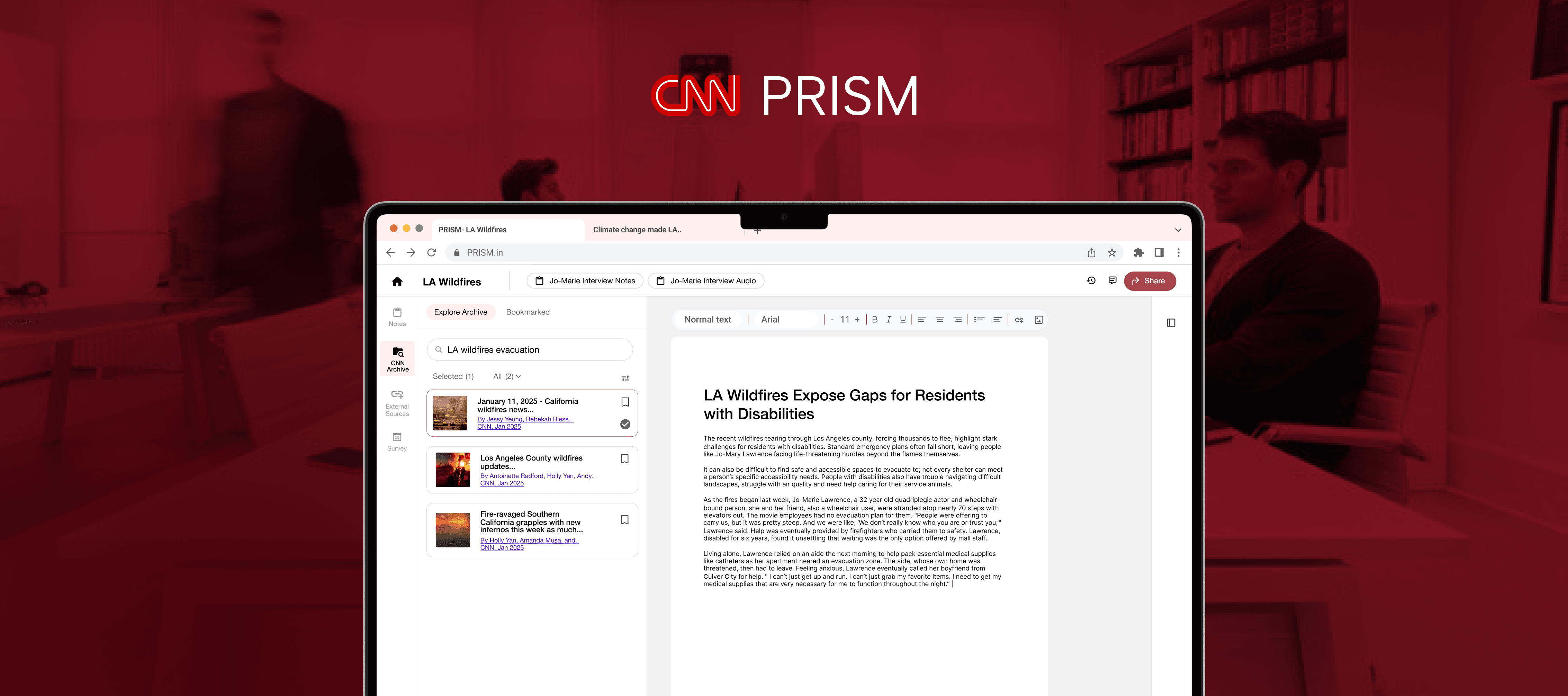
AI UX
Editorial Design
CMS
Platform
Desktop Web Interface
Type
AI-Powered CMS ·
Capstone Team Project
My Role
End-to-end UX Research & Design Lead — drove research strategy, synthesized behavioral insights from 30+ interviews, and translated findings into a production-grade AI writing workspace.
Skills
UX Research,
Product Design,
AI Interaction Design,
Information Architecture,
Motion & Prototyping
Overview
The news never stops. The tools have not kept up. CNN journalists were filing stories across screens, juggling notes, transcripts, and fact-checks under shrinking deadlines. Fragmented workflows do not just waste time; at CNN's scale, one unchecked claim published under pressure isn't an inefficiency, it's a trust event.
Outcome
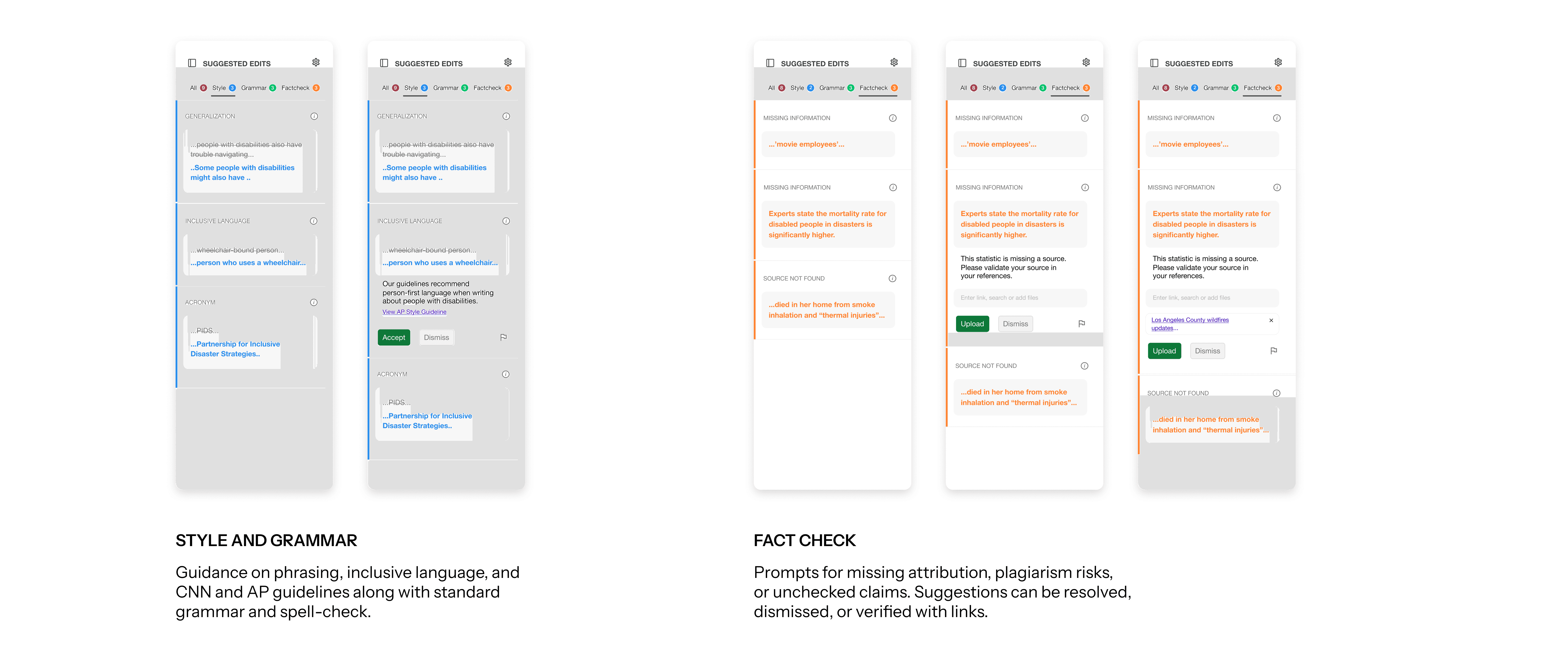
A unified AI writing workspace where research, drafting, and fact-checking live side by side and AI flags, but never decides. Pitched to CNN newsroom leadership after 8 months of research-led design. The question that drove every decision:
What does it cost to automate the wrong thing?


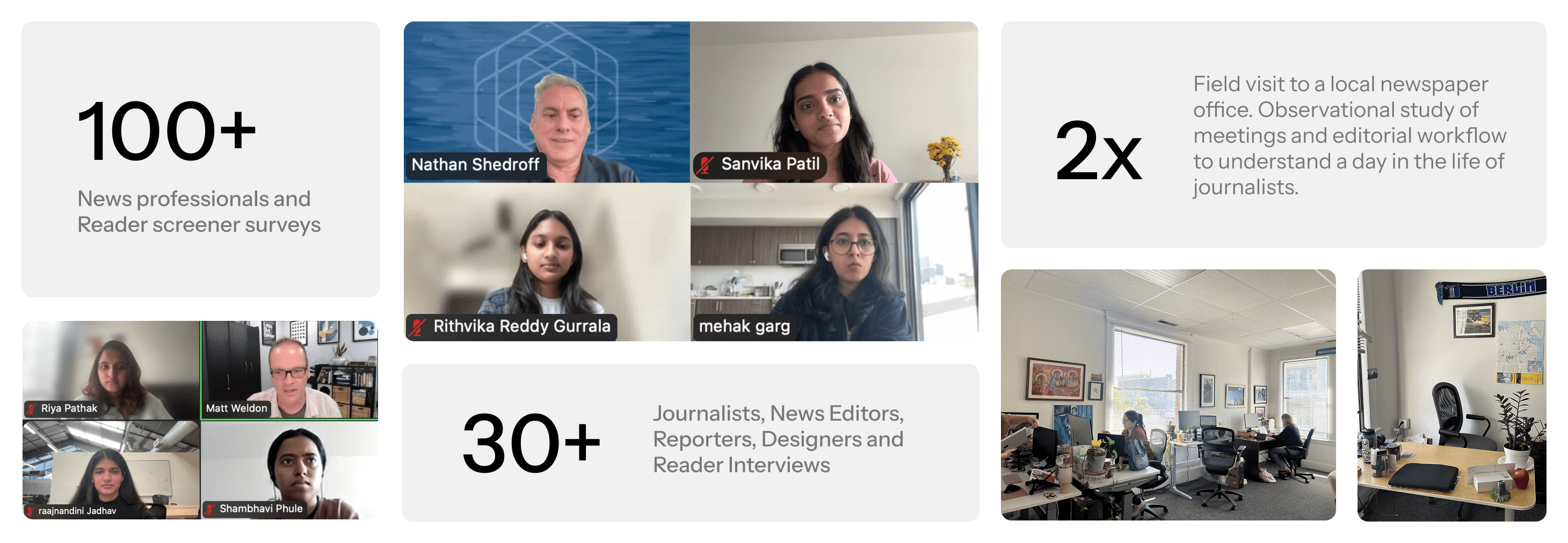
We were invited into CNN's newsroom through CCA's Social Lab to answer one question:
What does it actually cost to produce a story and where is design failing the people who produce them?
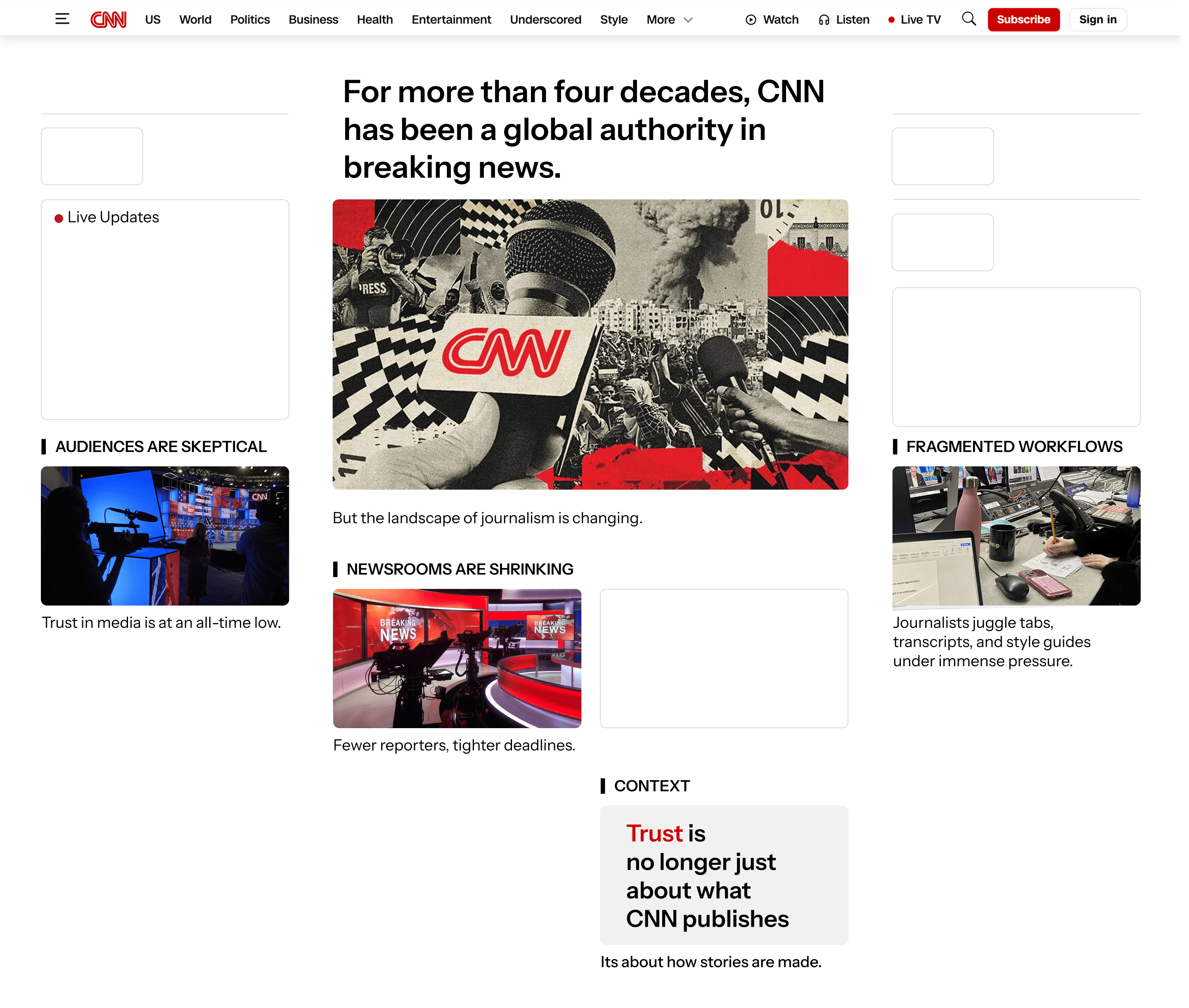
Why trust?
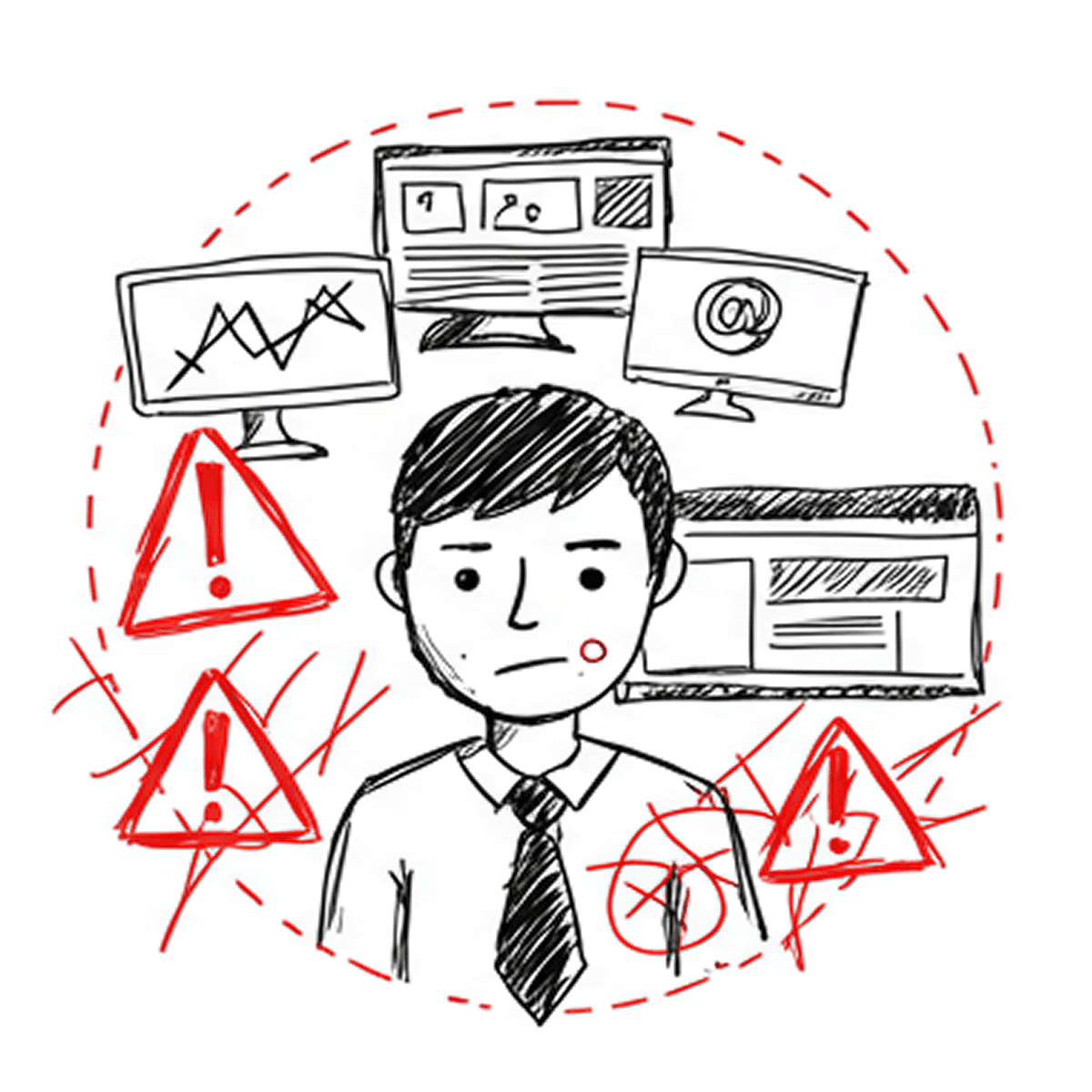
Misinformation spreads faster than corrections. Deadlines get shorter every cycle. And behind every CNN byline is a reporter bouncing between a dozen open tabs, handwritten notes, audio files, and a draft that's due in the hour.
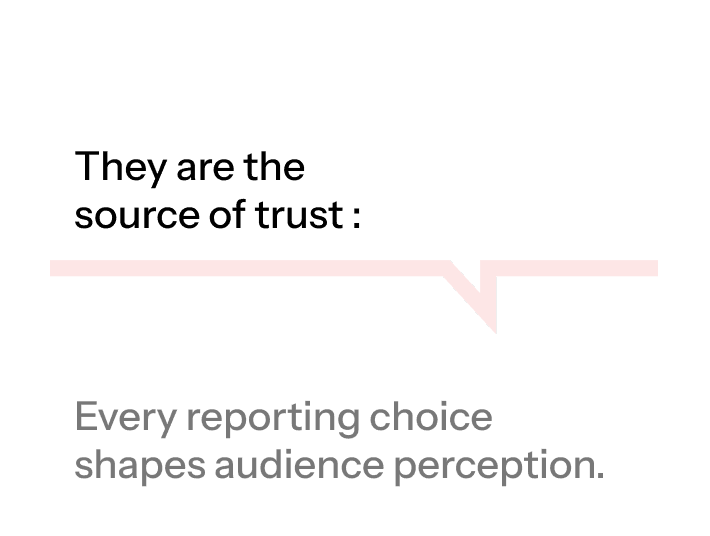
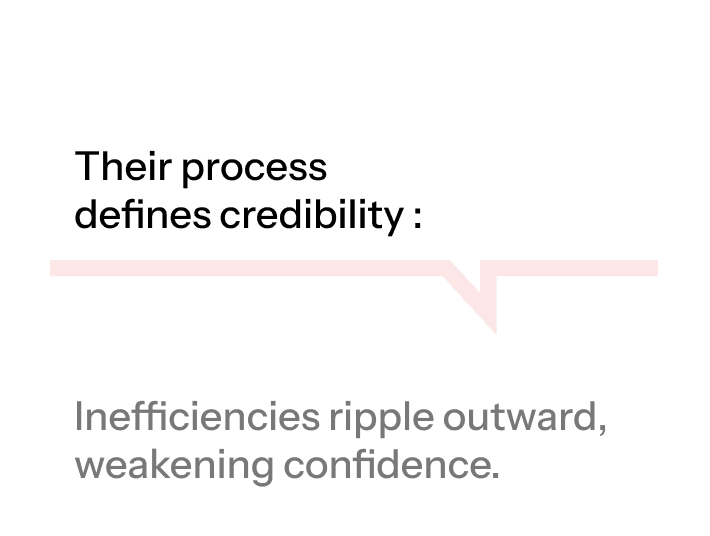


Three things silently breaking every story.
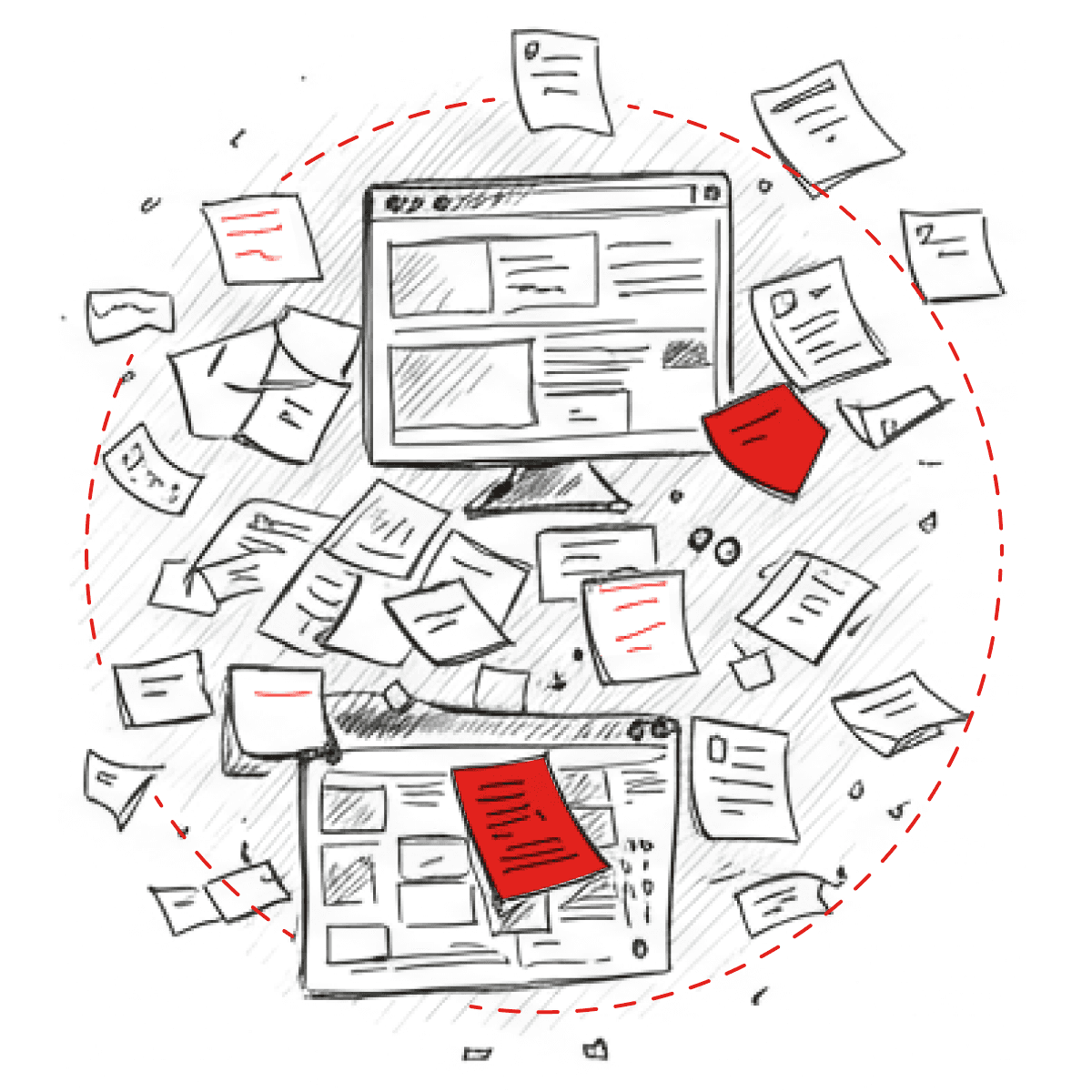
01 — Observed Behavior
Context switching was so costly, journalists built their own workarounds and accepted the risk.
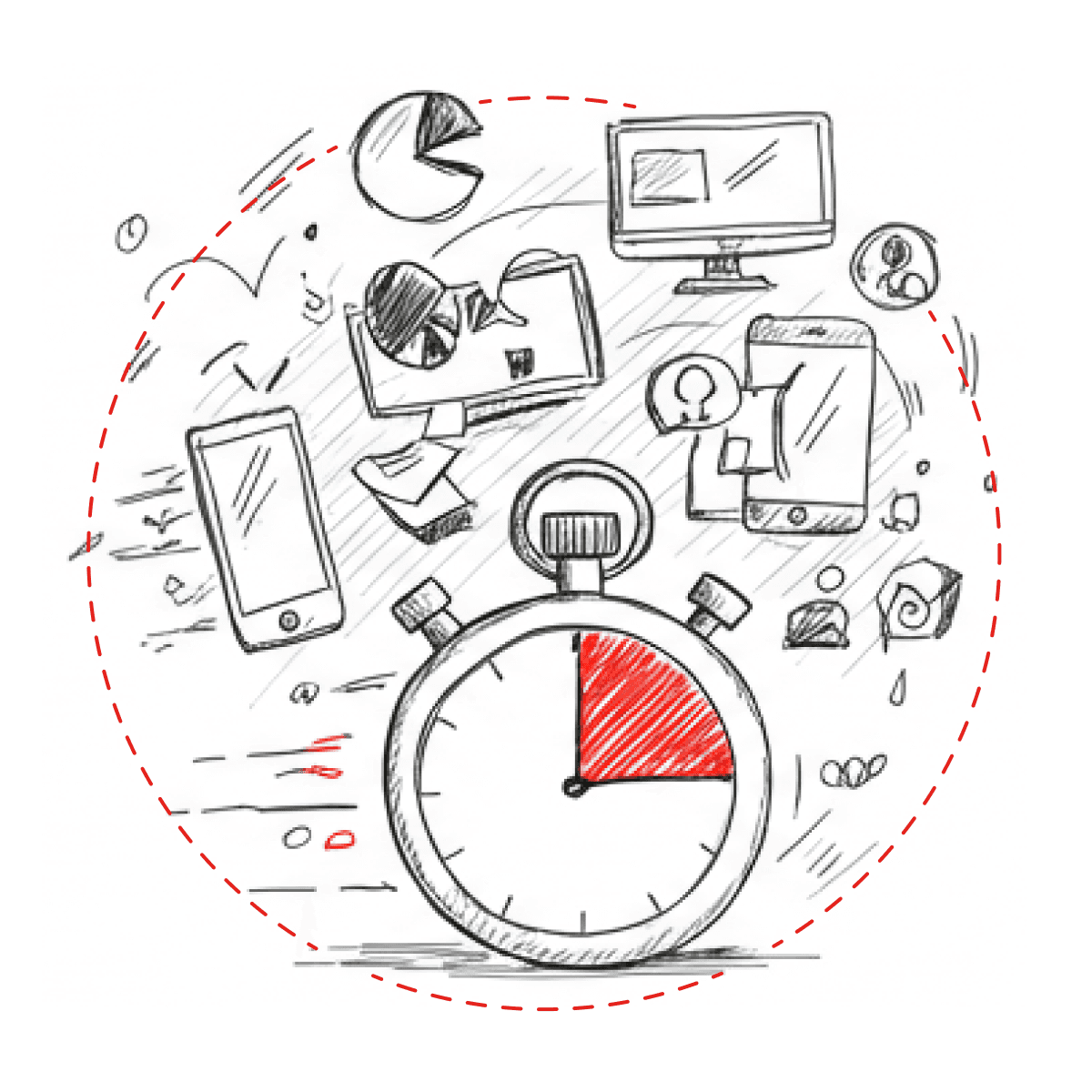
02 — Interview Synthesis
Editors spent hours on errors that should have been caught two steps earlier.
03 — The Real Tension
Reporters: control. Editors: automation. Most tools pick one. We had to design for both in the same interface.

Research to decisions
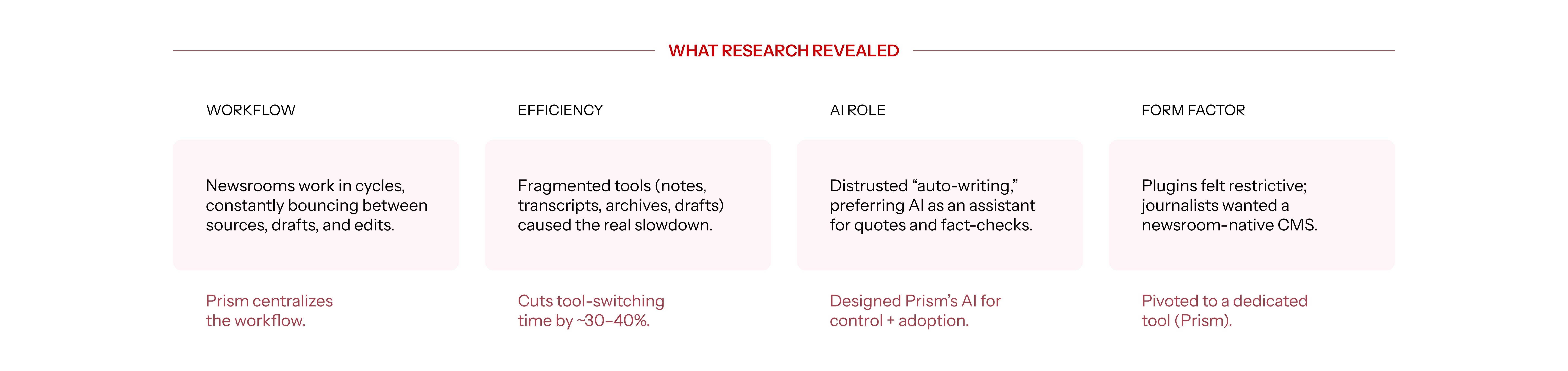
Every feature exists because of a specific thing someone said or did.
Not assumptions. Not best practices. Observed behavior and verbatim frustration, mapped directly to decisions.
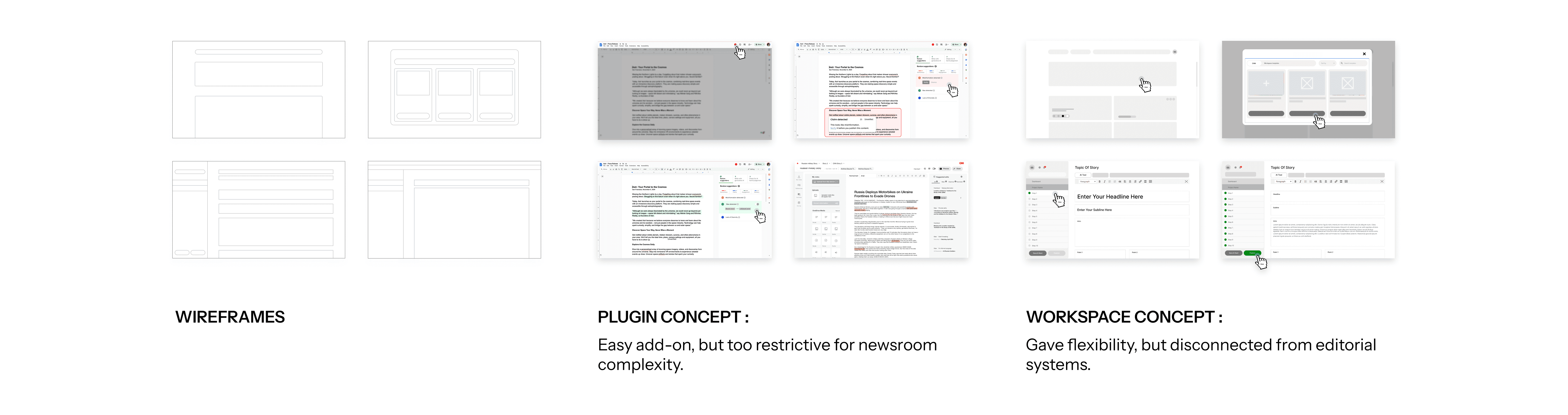
Patterns emerged, ideas evolved, and walls filled with sketches.
Through countless iterations, a new space for storytelling emerged
— built from insight, collaboration, and creative momentum.

PART I

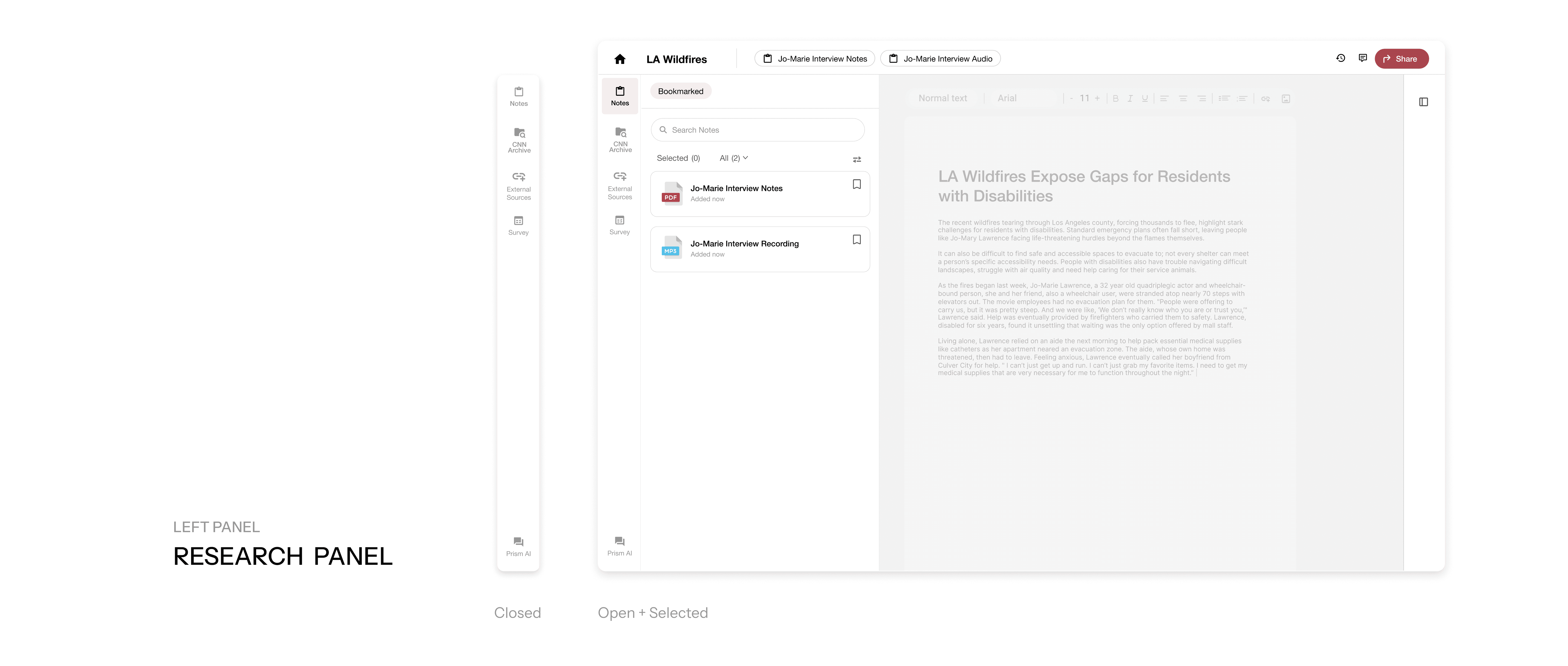
PART II

PART III

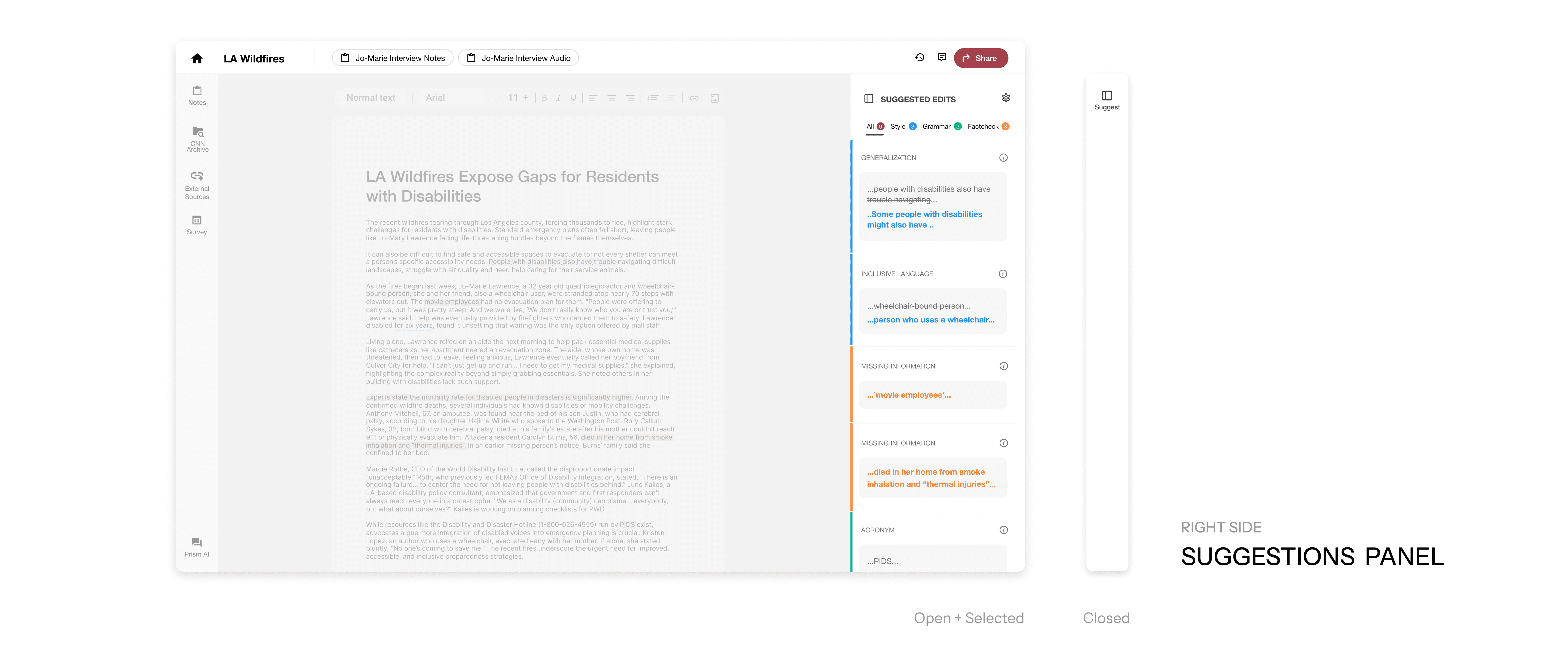
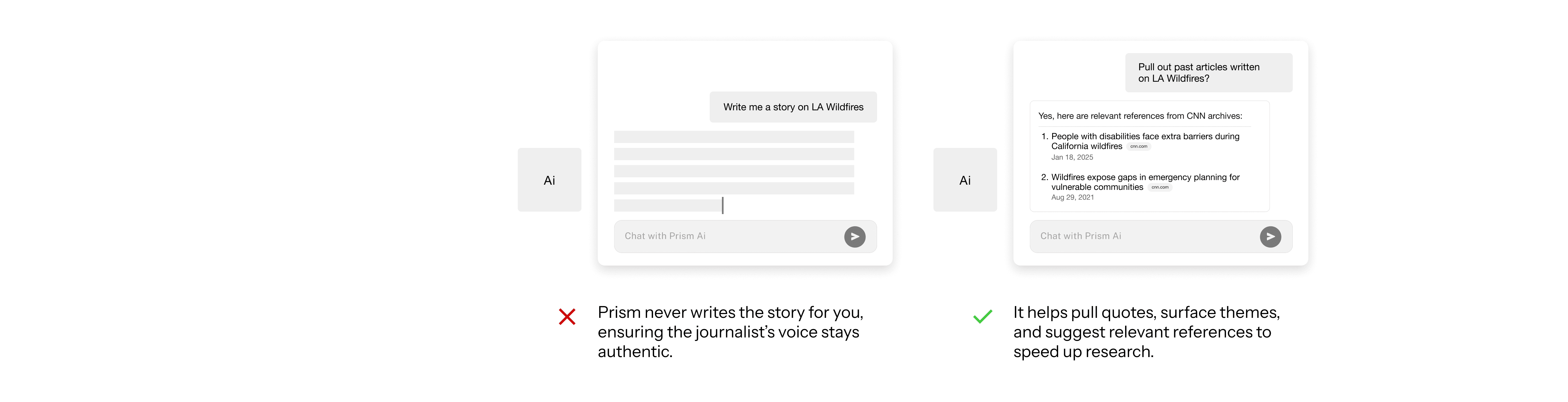
Control over automation
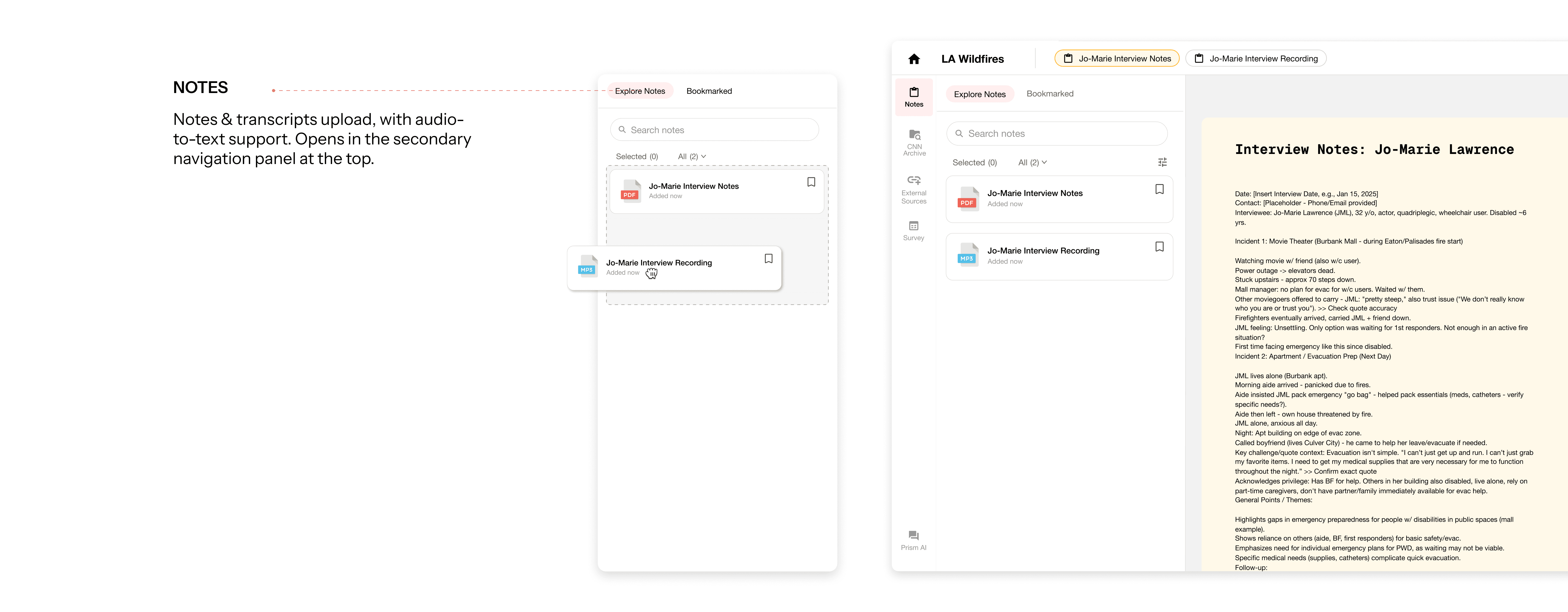
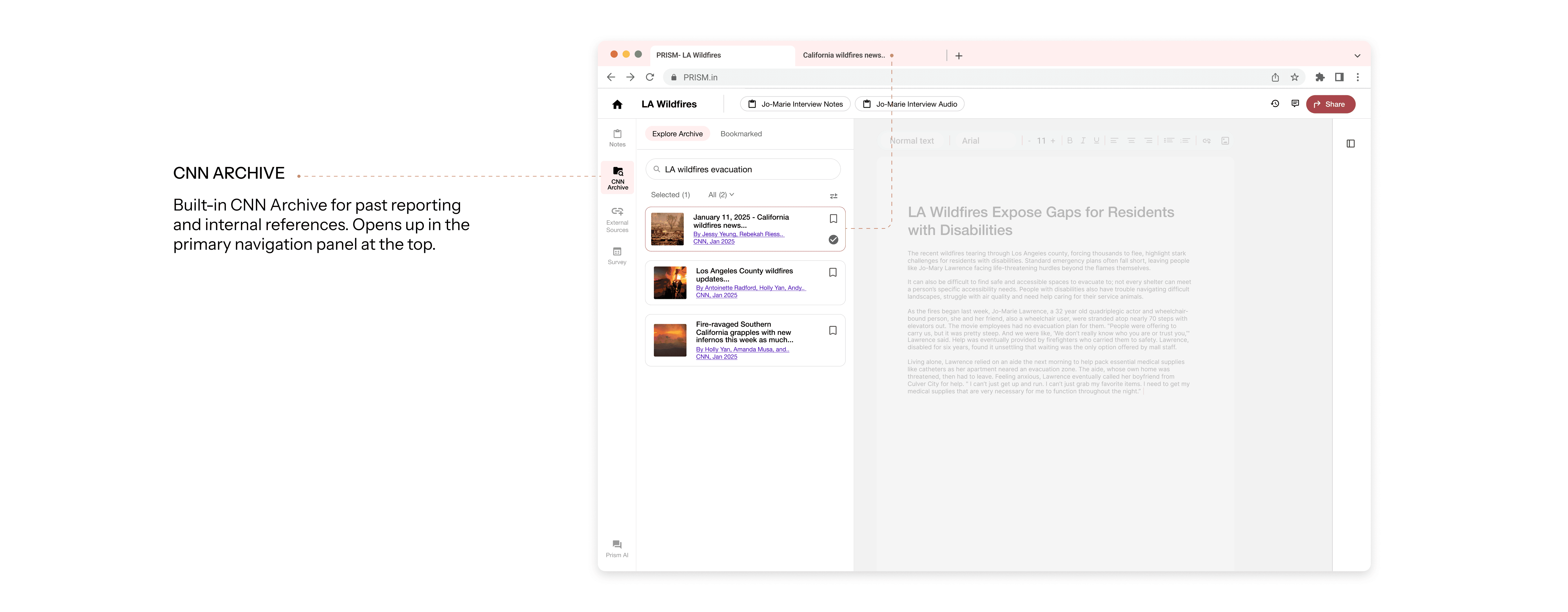
Simpler navigation
Sharper hierarchy
Faster collaborations
Two pitch sessions | Two presentations.
Live demos | Real reactions.
Learnings
What changed:
Editors caught less because journalists missed less.
Attribution flagged during writing, not after deadline.
What research did:
It argued for us when stakeholders pushed for more automation.
Evidence beats opinion in every room.
What AI taught me:
Trust isn't a feature. It's the interaction model.
When it speaks, how loud, and whether it listens when told no, that's the product.
Money between friends isn't a math problem. It's a social contract with a UI on top.
Prism started as a tool problem. It ended as a trust problem. The more time we spent inside actual newsrooms, watching journalists work, not just interviewing them, the clearer it became: the risk wasn't that AI would be wrong. It was that journalists would stop questioning it.
Every "resolve / dismiss" button in Prism exists because a reporter told us, unprompted, that they'd learned to distrust tools that seemed too confident. That's not a UI preference. That's a survival instinct built from years of deadline pressure.
The real insight wasn't about journalism at all. It was about any high-stakes domain where speed and accuracy are both non-negotiable, healthcare, law, finance. In those spaces, the designer's job isn't to make AI smarter. It's to make human judgment feel safe, fast, and respected. Automation that removes friction often removes something more important with it.
Design the exit ramp before you build the highway.