Turning art into dialogue with conversational intelligence.

ReFrame.ai
ReFrame.ai
OVERVIEW
OVERVIEW
Art often feels distant, labels speak, but artists don’t. Visitors miss the personal voice and dialogue behind each work. A lack of interaction that makes art feel distant and static.
IMPACT
IMPACT
Reframe.ai turns viewing into conversation. By giving art a voice through AI, it deepens engagement, builds connection, and reframes how audiences experience creativity.

CONTEXT
CONTEXT
Art is everywhere.
On walls - in streets - in galleries, but too often, it whispers instead of speaks.
Visitors look, nod, and move on. Curiosity is sparked, but rarely answered. Emotion is felt, but rarely voiced.
We wanted to change that. To reframe art not as something you just see, but as something you can talk to.

From roommates sharing bills to coworkers organizing lunch runs to students tracking weekly groceries, people rely on apps like Splitwise to manage group expenses.

SILENCE
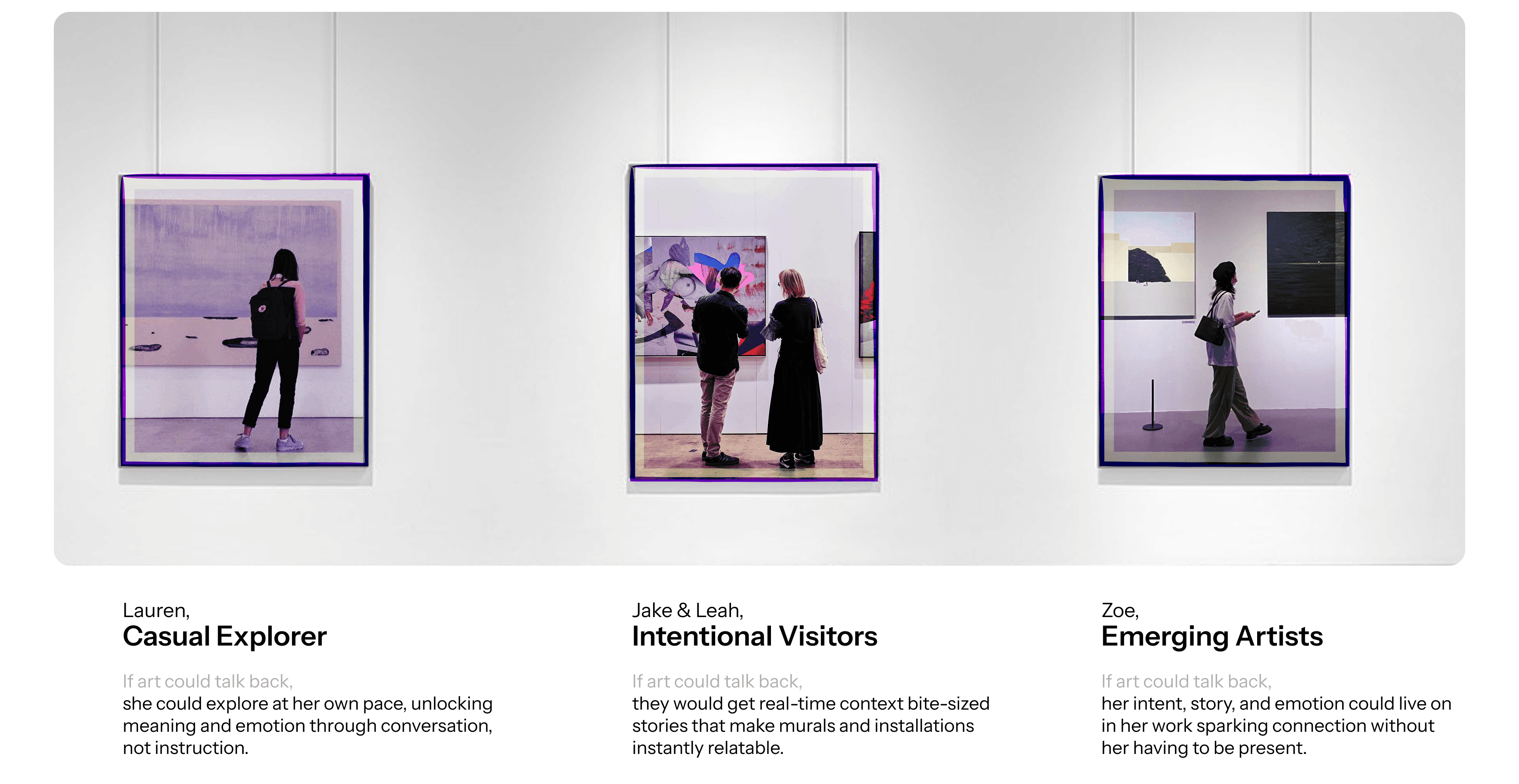
Passive viewing (look, nod, move on)
From roommates sharing bills to coworkers organizing lunch runs to students tracking weekly groceries, people rely on apps like Splitwise to manage group expenses.

CURIOSITY
No space for curiosity or questions
From roommates sharing bills to coworkers organizing lunch runs to students tracking weekly groceries, people rely on apps like Splitwise to manage group expenses.

CONVERSATION
Interactive dialogue
From roommates sharing bills to coworkers organizing lunch runs to students tracking weekly groceries, people rely on apps like Splitwise to manage group expenses.
SO WE ASKED THE USERS
What if art could talk back?


THE PROBLEM WE FRAMED
In a world where digital products teach, guide, and even argue with us, art still speaks in monologue. Visitors look, nod, and move on rarely given space for curiosity, conversation, or deeper connection.
THE OPPORTUNITY WE SAW
We saw a chance to give art dialogue.
What if paintings could answer your questions?
What if sculptures could share their stories?
What if art could remember you, as much as you remember it?
We saw a chance to give art dialogue.
What if paintings could answer your questions?
What if sculptures could share their stories?
What if art could remember you, as much as you remember it?

DASHBOARD
DASHBOARD
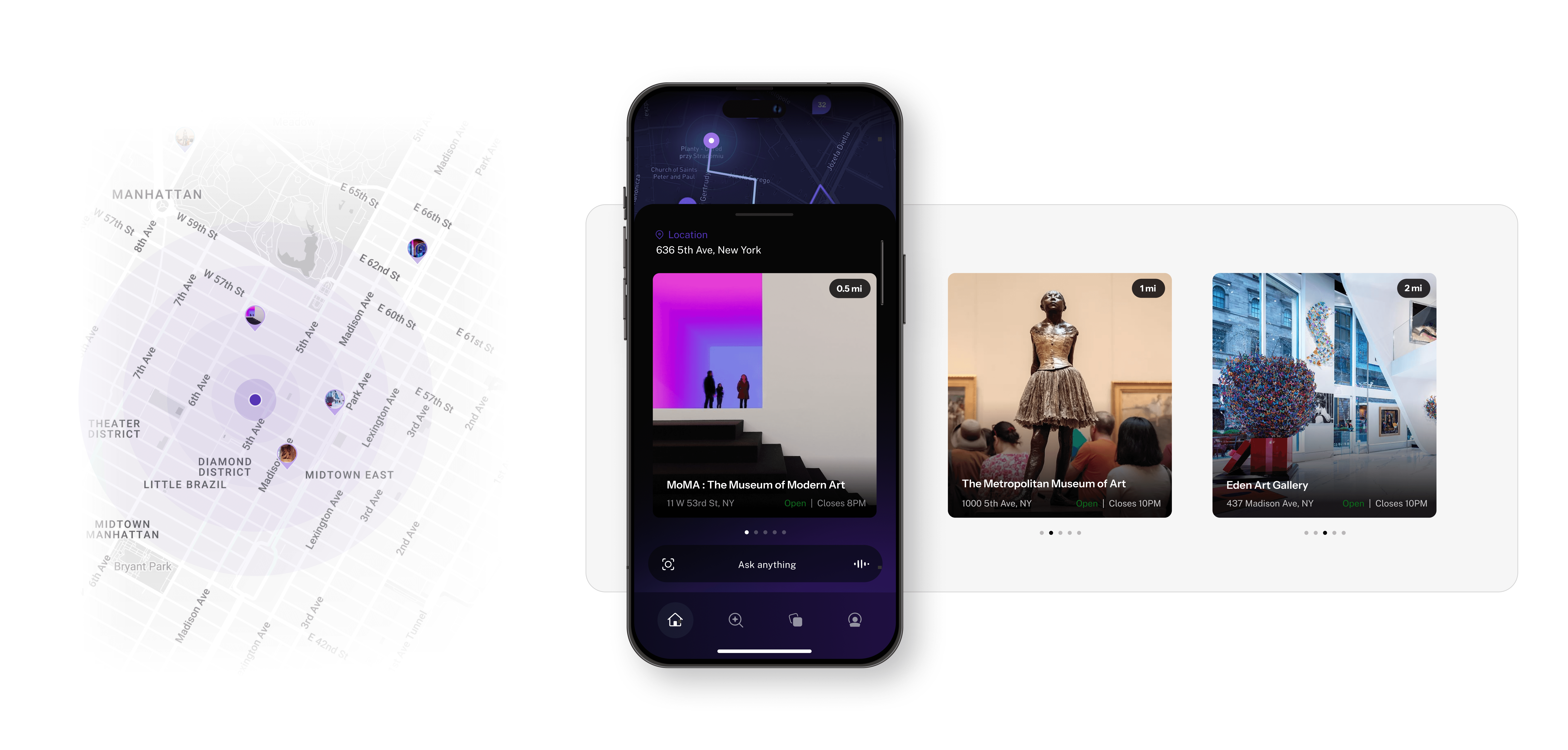
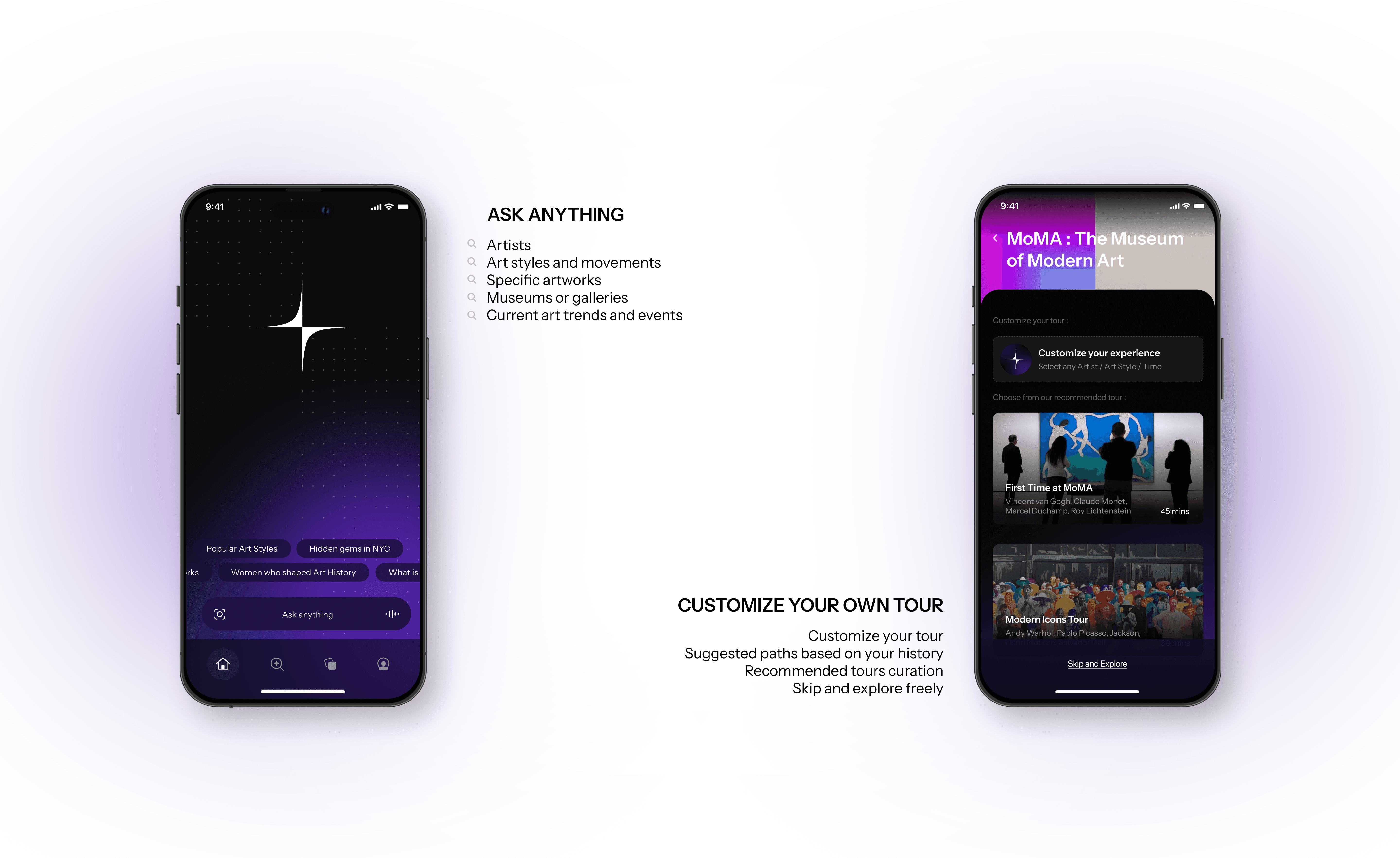
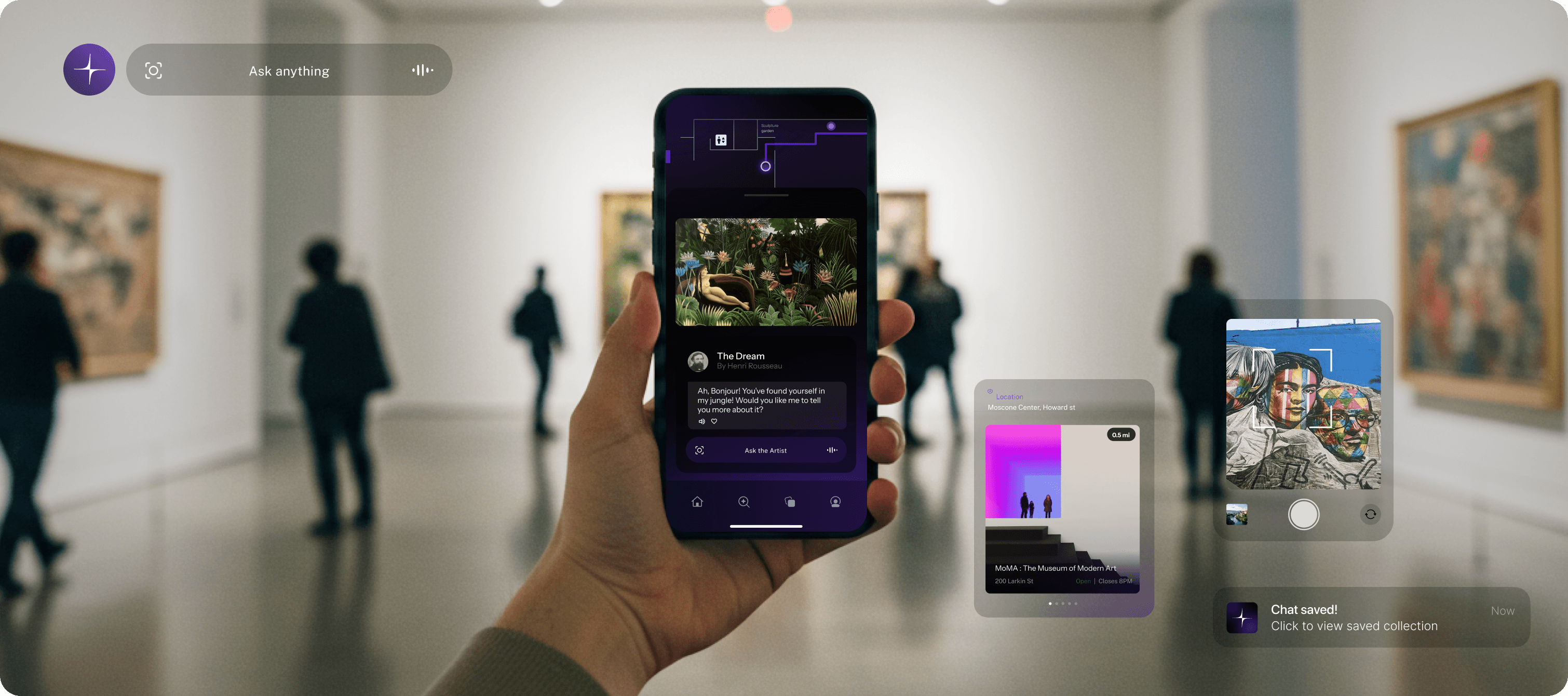
A map + carousel layout supports both spatial discovery and casual browsing. The “Ask Anything” prompt reduces friction and sparks curiosity.
Shows your current location with nearby artworks in a swipeable carousel. Pull the map down for full view. ‘Ask Anything’ search sits above the nav bar, ready for spontaneous curiosity.

At the heart of Reframe is a simple question
“What do you want to know?”
Reframe uses conversational AI to meet users where they are,
turning passive viewing into interactive discovery.
Reframe uses conversational AI to meet users where they are, turning passive viewing into interactive discovery.

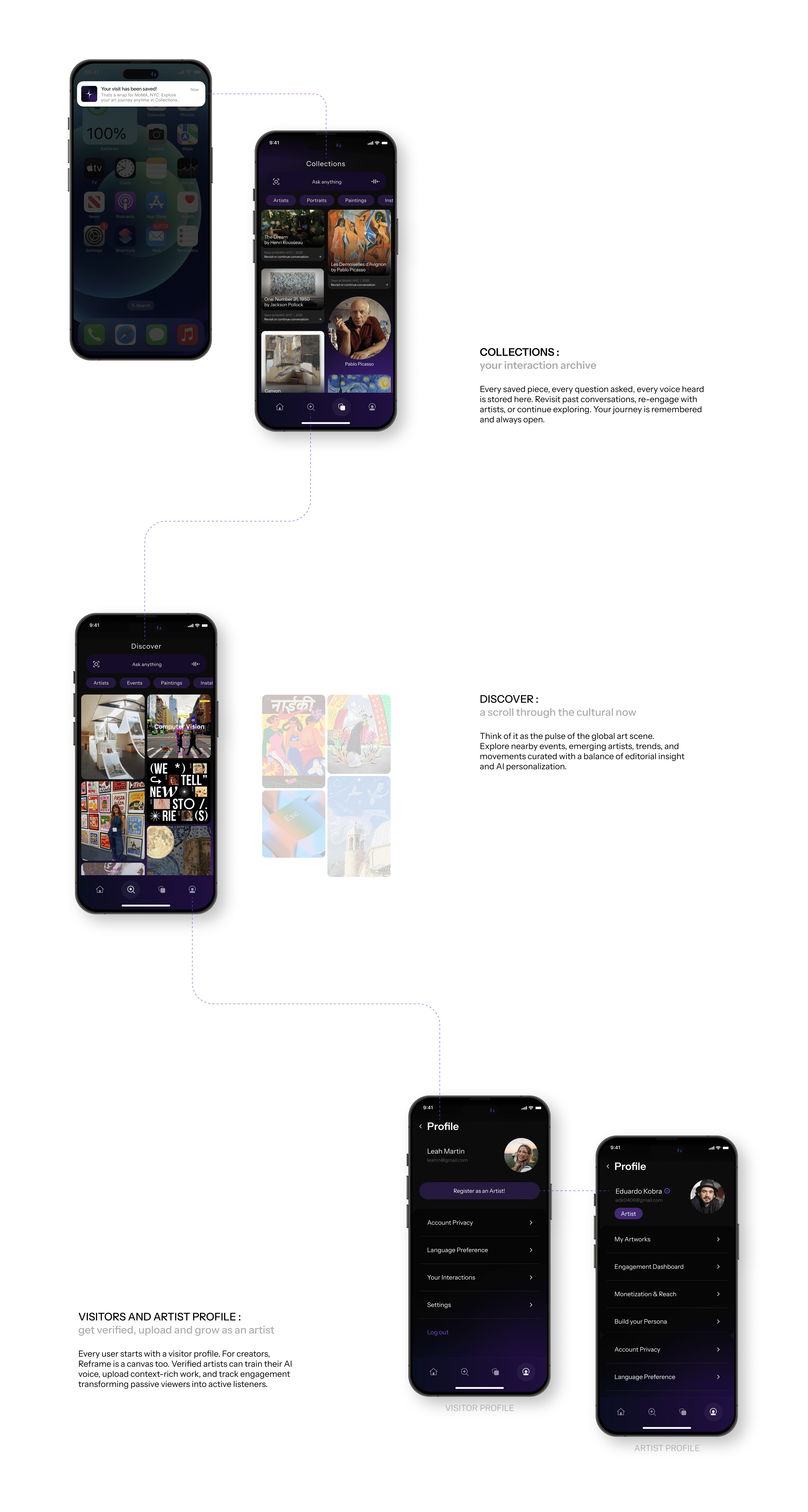
PROXIMITY BASED UNLOCKING
Artwork stays silent until users approach. This prevents overload and adds a sense of reveal, making the interaction feel alive.
Art stays quiet until you are ready. Once you near a piece, the app gently activates: the interface transforms, the artist introduces themselves, and interaction becomes inevitable.
CONVERSATION INTERFACE
This is where it gets personal.
A minimalist UI keeps the art central. Multiple input modes (voice, text, camera) ensure inclusivity while responses balance clarity with emotion.
This is where it gets personal.
A minimalist UI keeps the art central. Multiple input modes (voice, text, camera) ensure inclusivity while responses balance clarity with emotion.
From roommates sharing bills to coworkers organizing lunch runs to students tracking weekly groceries, people rely on apps like Splitwise to manage group expenses.

FRAMING THE INVISIBLE

WHY THIS PROJECT MATTERS
I chose this project because I’ve always been fascinated by how people experience culture not just by what they see, but how they feel, interpret, and carry it with them.
Too often, art feels out of reach quiet, static, or gatekept by language and context. I wanted to challenge that.
ReFrame Ai emerged as a response to this silence reimagining how we interact with art in everyday spaces, and how artists can embed their voice into the work long after it’s made. It matters because it makes art personal again.
I chose this project because I’ve always been fascinated by how people experience culture not just by what they see, but how they feel, interpret, and carry it with them.
Too often, art feels out of reach quiet, static, or gatekept by language and context. I wanted to challenge that.
ReFrame Ai emerged as a response to this silence reimagining how we interact with art in everyday spaces, and how artists can embed their voice into the work long after it’s made. It matters because it makes art personal again.
From roommates sharing bills to coworkers organizing lunch runs to students tracking weekly groceries, people rely on apps like Splitwise to manage group expenses.
Accessible | Alive | Ongoing
From roommates sharing bills to coworkers organizing lunch runs to students tracking weekly groceries, people rely on apps like Splitwise to manage group expenses.
MY LEARNINGS AS A DESIGNER
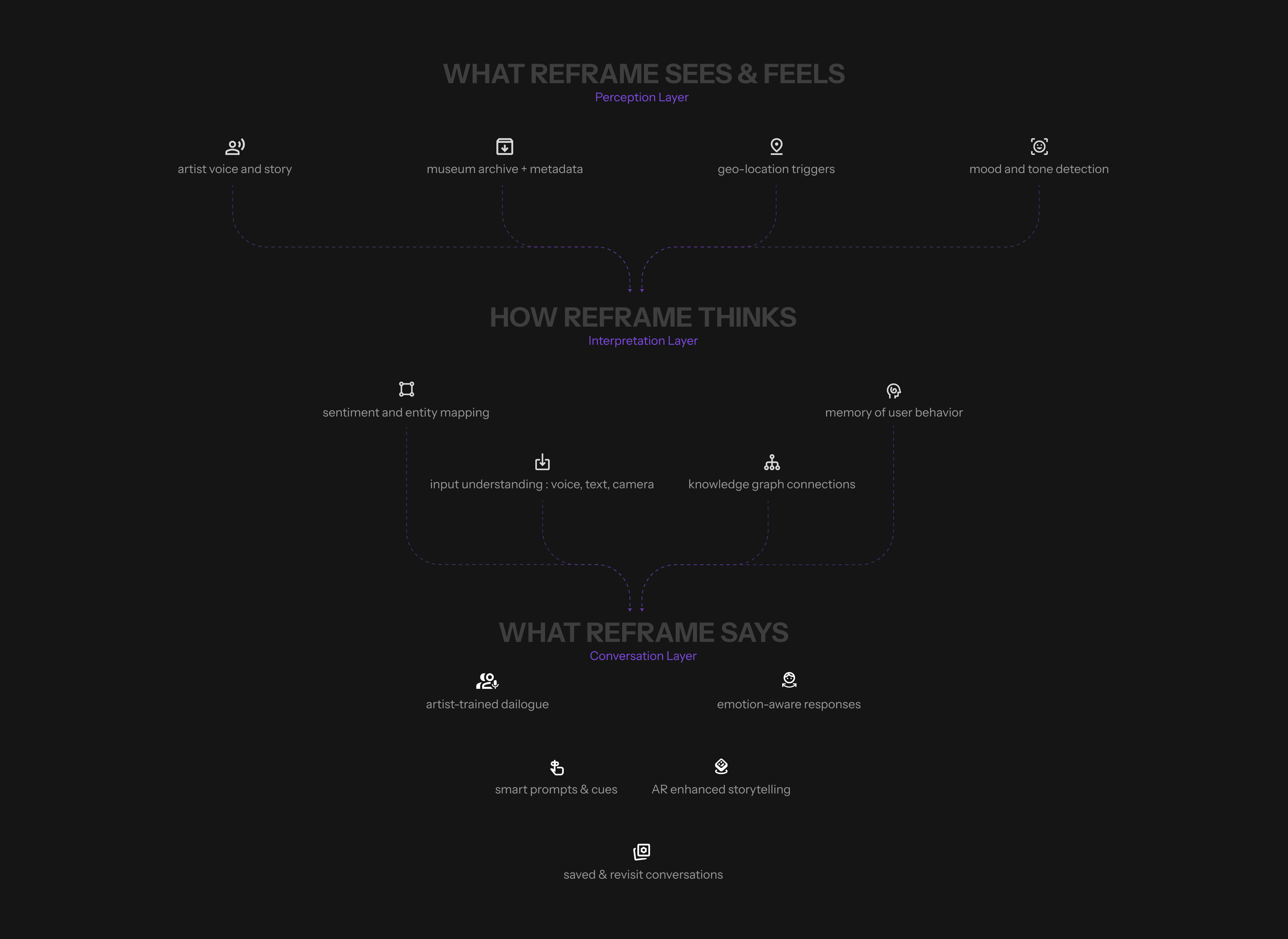
Design for context-aware interaction across space, mood, and behavior
Translate complex AI systems into human-centered conversational flows
Balance multiple user perspectives (visitors, artists, institutions)
Create responsive interfaces that evolve with user input
Craft a multi-modal experience that bridges physical movement with digital feedback
Design for context-aware interaction across space, mood, and behavior
Translate complex AI systems into human-centered conversational flows
Balance multiple user perspectives (visitors, artists, institutions)
Create responsive interfaces that evolve with user input
Craft a multi-modal experience that bridges physical movement with digital feedback
From roommates sharing bills to coworkers organizing lunch runs to students tracking weekly groceries, people rely on apps like Splitwise to manage group expenses.
ReFrame reminded me that great interaction design is not just about clarity and utility. It’s about creating space for wonder, voice, and meaning.

Splitwise Reimagined
Mobile Experience · Interaction Patterns · Usability Improvement
->

Google Maps: Emergency Link
System Thinking & Design · Real-Time Communication & Infrastructure · Interface & Experience Design
->


THE PROBLEM WE FRAMED
Could we design a system that gives art a voice and gives people permission to talk back?
THE OPPORTUNITY WE SAW
This led us to explore Conversational AI as a bridge between viewer and creator. A way to surface context, intent, and story dynamically based on what the user is curious about, where they are, and how they want to engage.

THE PROBLEM WE FRAMED
Could we design a system that gives art a voice and gives people permission to talk back?
THE OPPORTUNITY WE SAW
This led us to explore Conversational AI as a bridge between viewer and creator. A way to surface context, intent, and story dynamically based on what the user is curious about, where they are, and how they want to engage.
Turning art into dialogue
with conversational intelligence.


Turning art into dialogue with
conversational intelligence


ReFrame.ai
8 weeks | Team Project
Sanvika P · Raajnandini J · Shambhavi P. · Chaitanya L
OVERVIEW
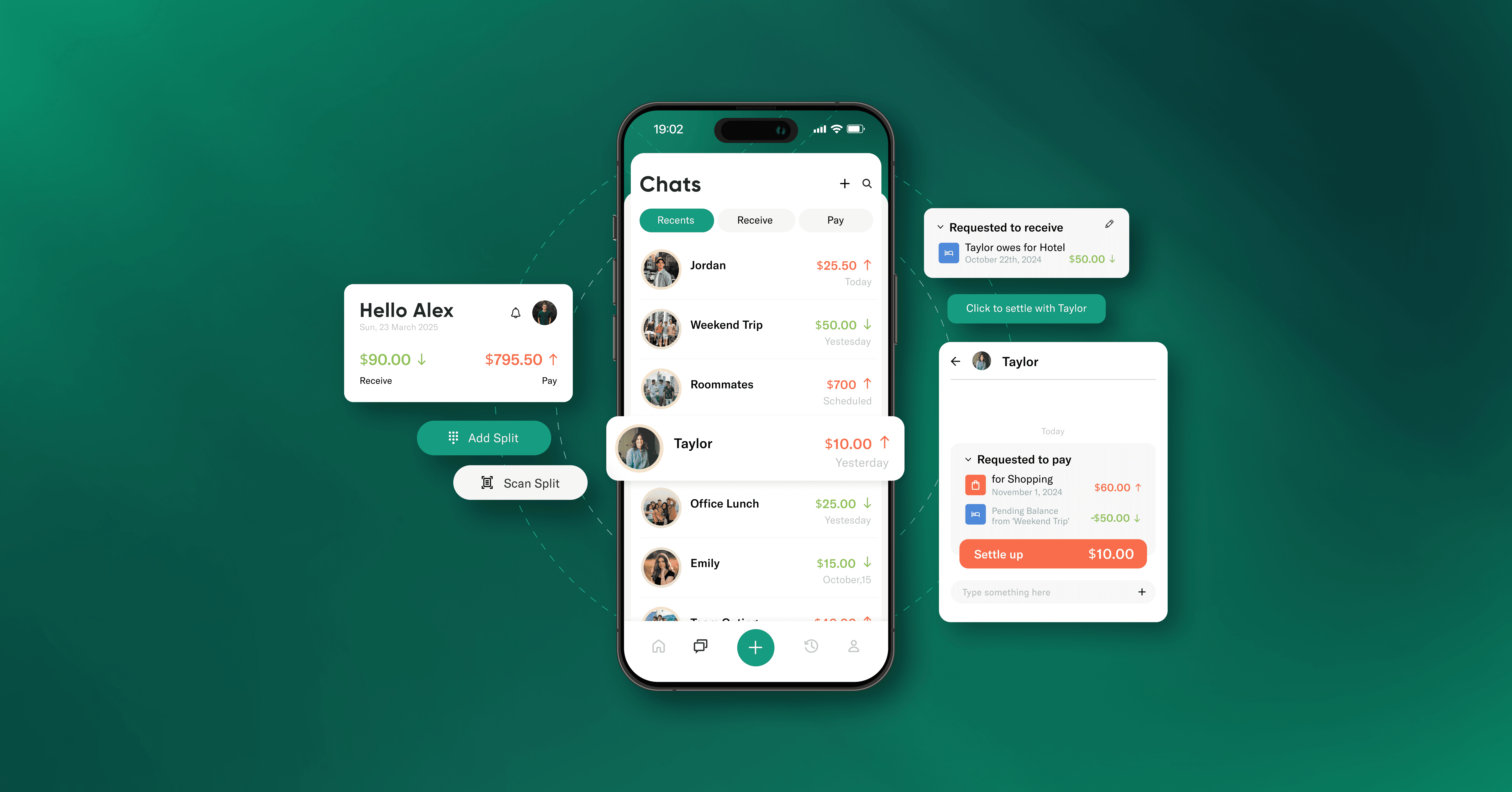
Money isn’t just math — it’s trust, fairness, and sometimes friction. Splitting bills should feel effortless but in Splitwise today, payments are slow, privacy is limited, and groups get messy. What should be simple often turns into confusion and delays.
IMPACT
Splitwise reimagined has built-in payments, smarter groups, privacy you can control, and chats right where expenses happen.
Resulting in faster settlements, clearer splits, and fewer disputes up to quicker paybacks and 2x more clarity if implemented.