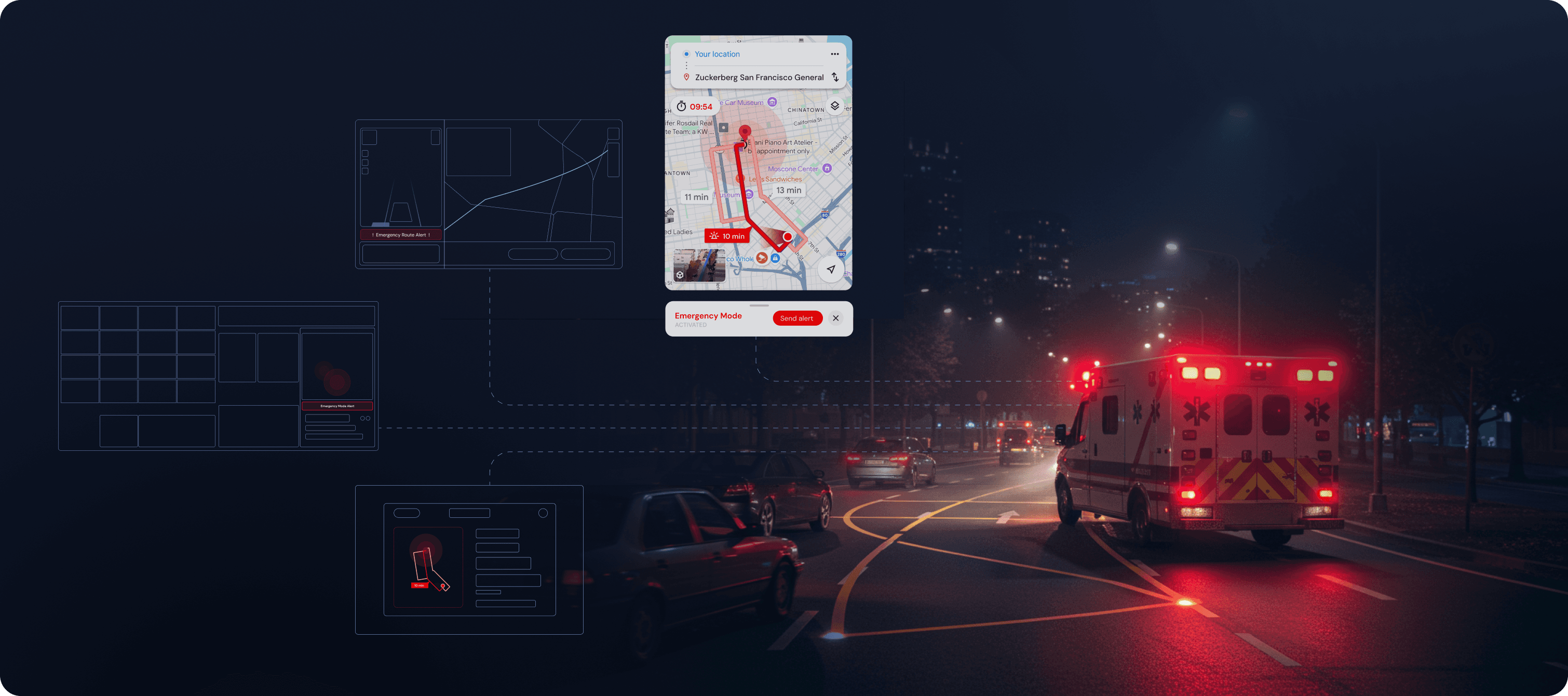
Turning navigation into life-saving coordination

Google Maps: Emergency Link

OVERVIEW

OVERVIEW

In emergencies, time is lost in confusion, sharing exact location, coordinating help, and staying connected isn’t seamless in Google Maps today.

IMPACT

IMPACT

Emergency Link adds a one-tap safety feature to Google Maps. It instantly shares live location and critical details with trusted contacts, enabling faster responses, clearer coordination, and potentially life-saving outcomes.

This concept starts right after the emergency call is placed, asking:

This concept starts right after the emergency call is placed, asking:

This concept starts right after the emergency call is placed, asking:

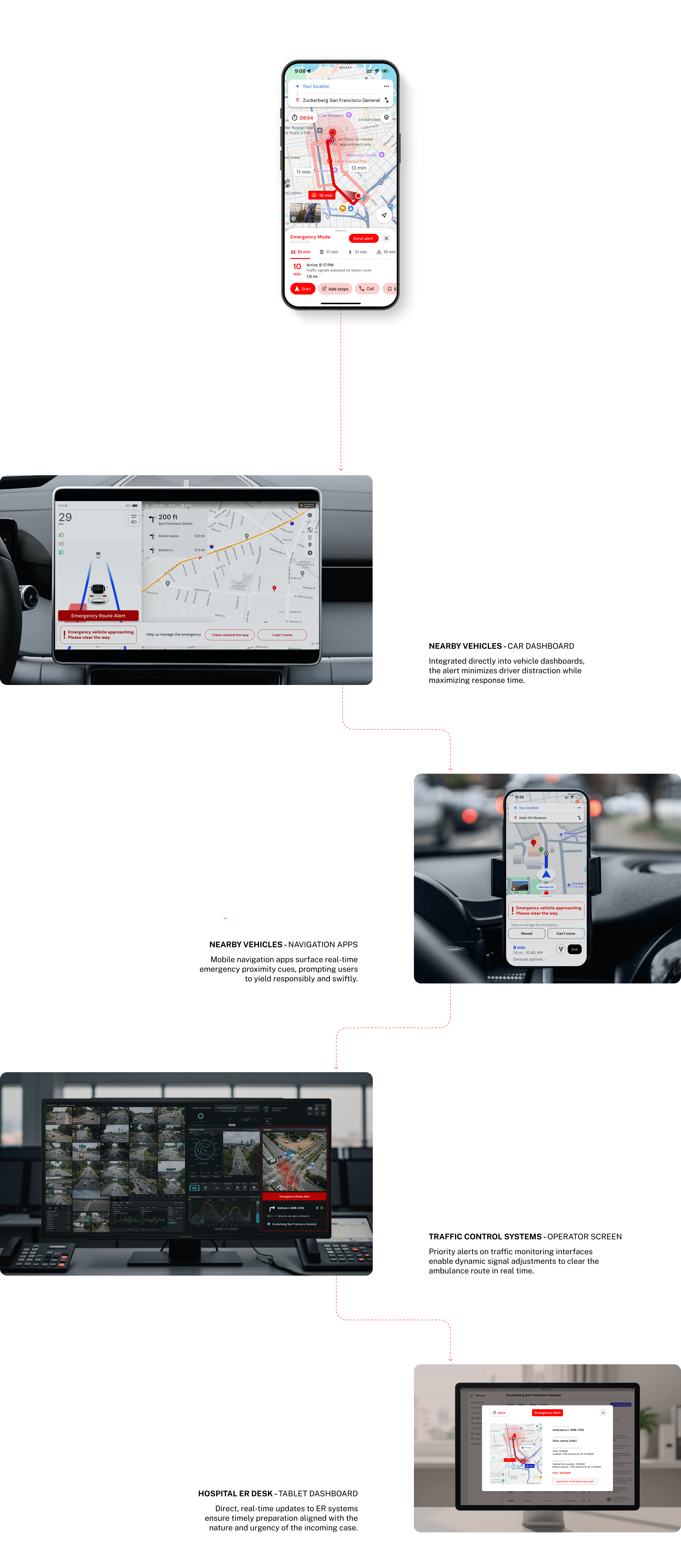
Can an ambulance driver initiate a controlled system of alerts that clears paths

and readies the hospital, all from within their navigation app?

Can an ambulance driver initiate a controlled system of alerts that clears paths and readies the hospital, all from within their navigation app?

CONTEXT

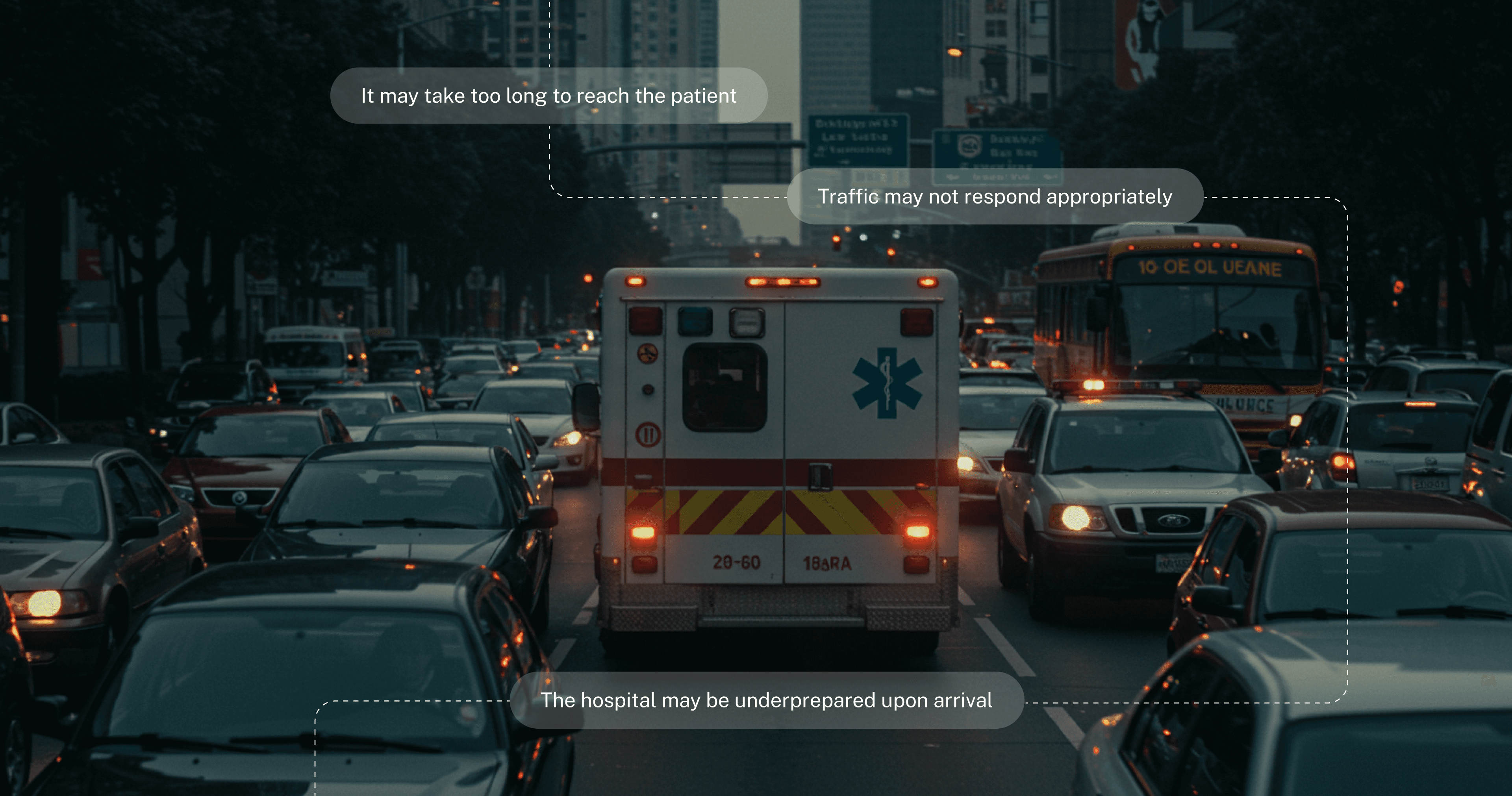
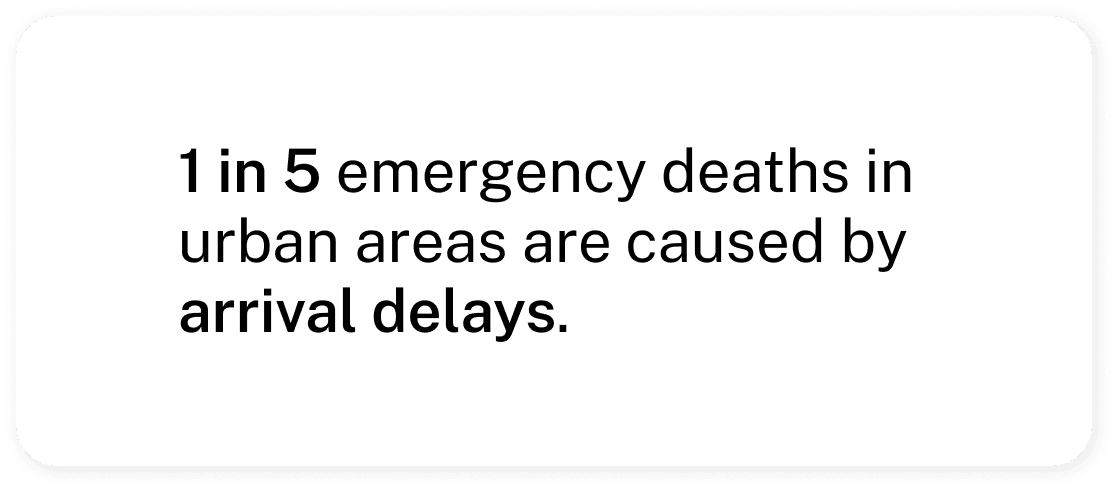
Delays in emergency response often occur due to late alerts, uncoordinated traffic systems, and lack of real time communication between stakeholders.

Emergency coordination is multi-layered — requiring clarity across systems.

  • Condition reported


  • Ambulance dispatched

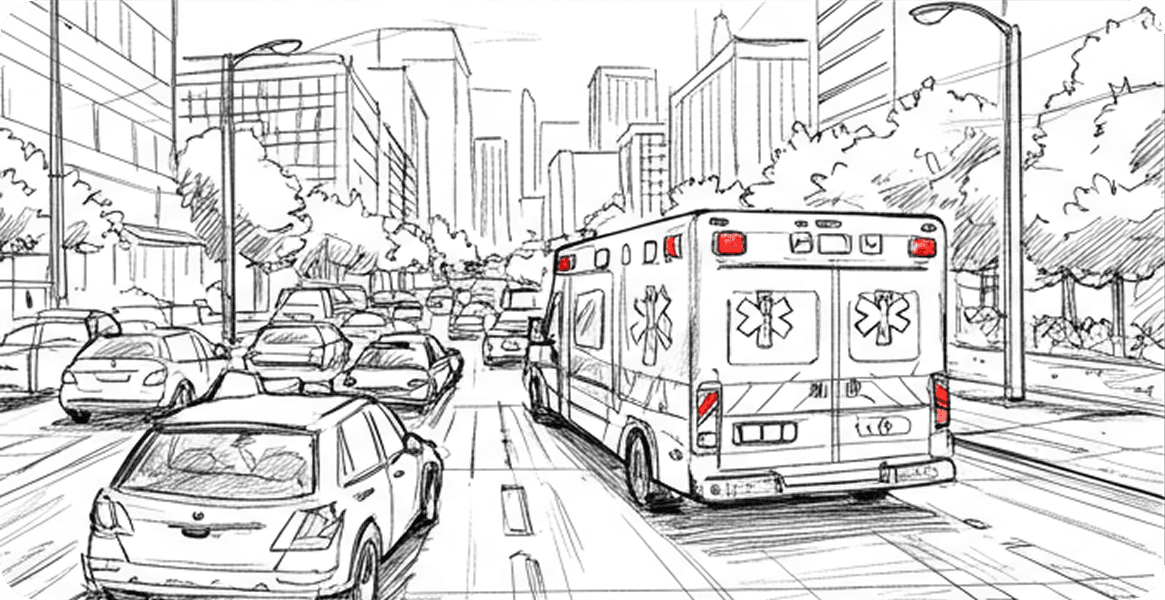
  • Faces traffic congestion


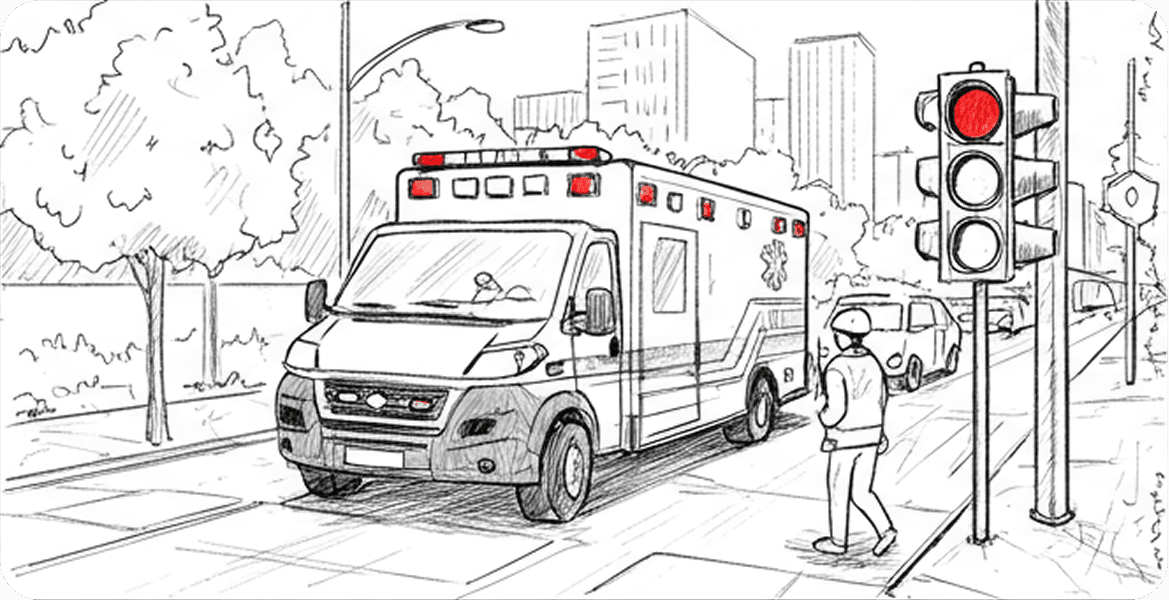
  • No traffic signal coordination

  • Sirens heard late


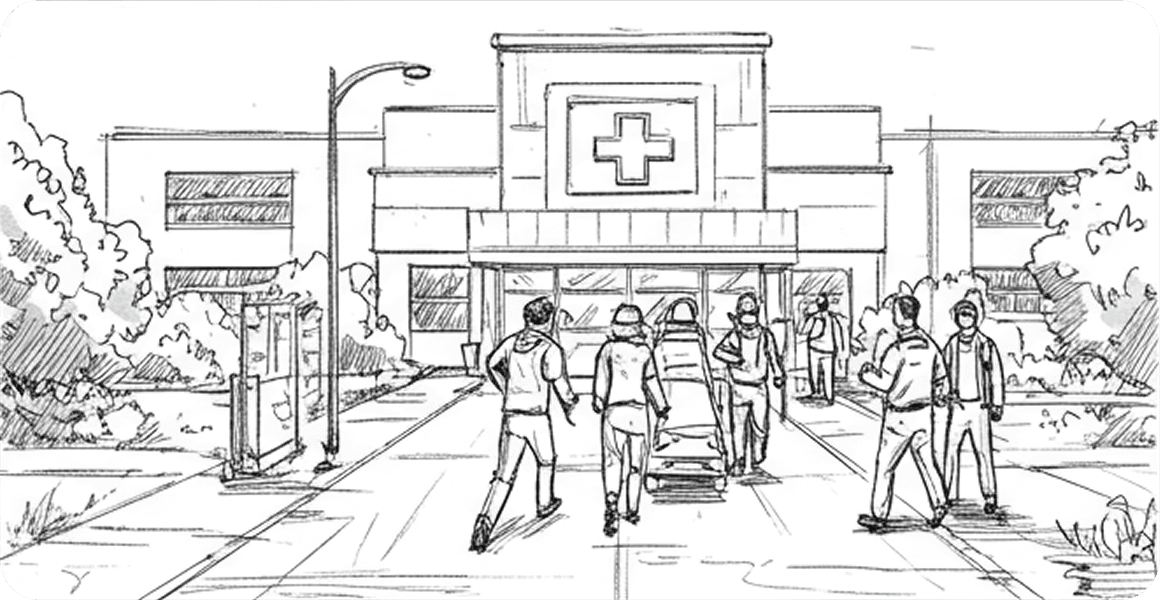
  • Delayed hospital arrival

BREAKPOINTS IN THE JOURNEY

BREAKPOINTS IN THE JOURNEY

BREAKPOINTS IN

THE JOURNEY

->

->

->

->

->

ECOSYSTEM STAKEHOLDERS

ECOSYSTEM STAKEHOLDERS

ECOSYSTEM

STAKEHOLDERS

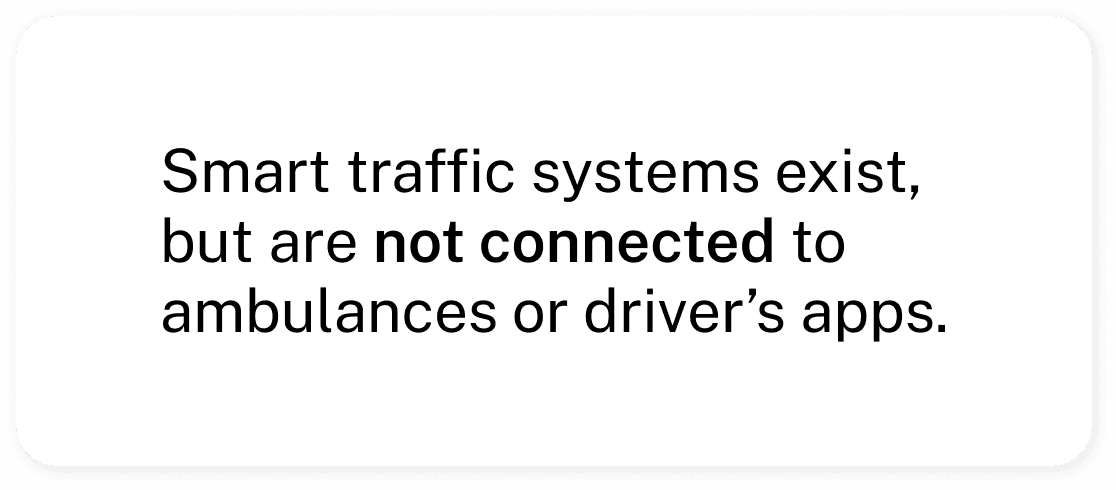
Emergencies don’t fail due to one broken link. They fail when information, action, and infrastructure aren’t talking to each other. This map helps visualize how to design for flow, not friction.

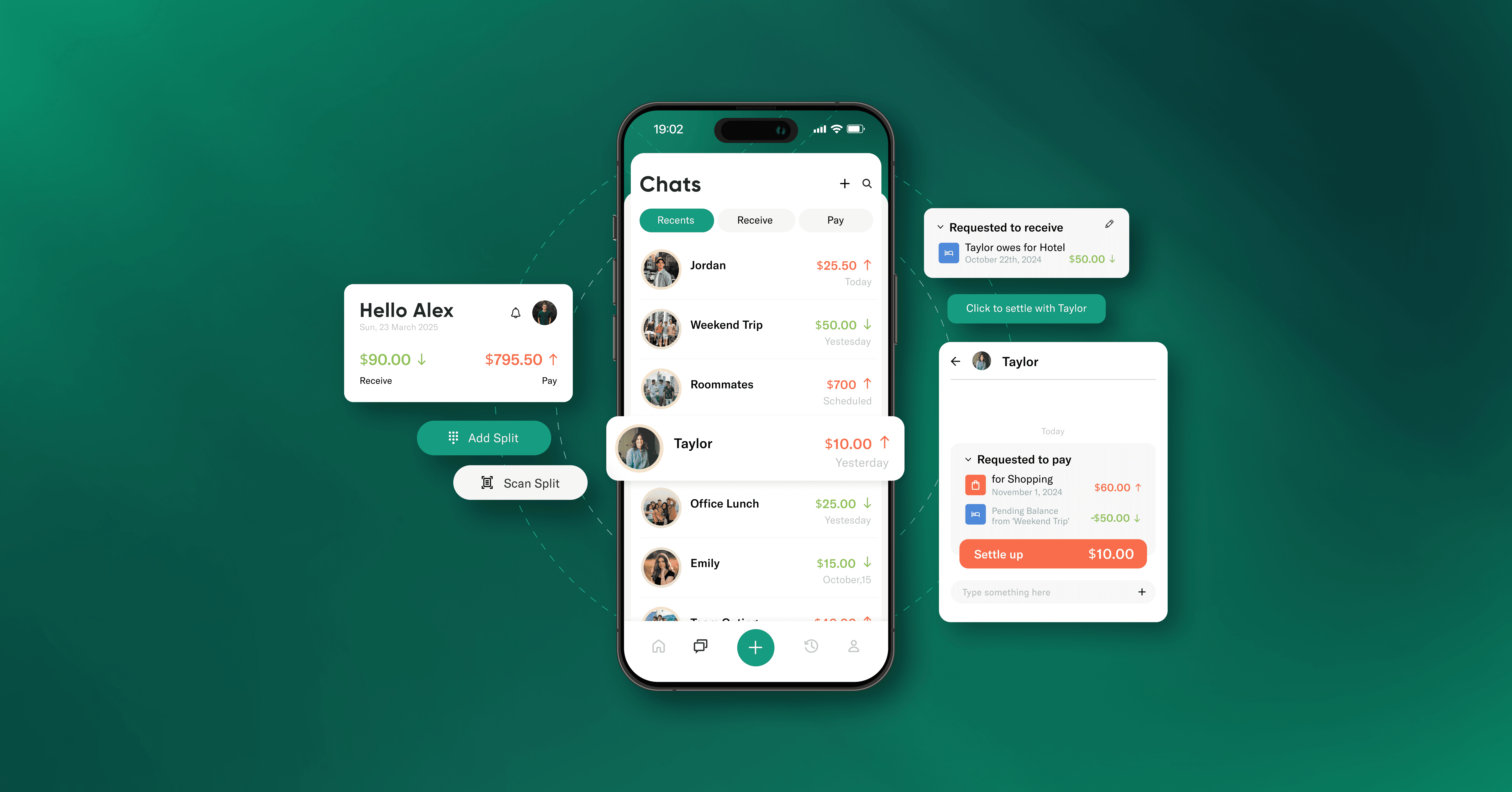
From roommates sharing bills to coworkers organizing lunch runs to students tracking weekly groceries, people rely on apps like Splitwise to manage group expenses.

THE EMERGENCY CHAIN OF COORDINATION

THE EMERGENCY CHAIN OF COORDINATION

THE EMERGENCY CHAIN OF COORDINATION

PROBLEM

PROBLEM

Despite calling emergency services in time, ambulances often face critical delays due to unclear location data, uncoordinated traffic, and lack of real-time communication with hospitals putting lives at risk during the most urgent moments.

From roommates sharing bills to coworkers organizing lunch runs to students tracking weekly groceries, people rely on apps like Splitwise to manage group expenses.

SOLUTION

SOLUTION

A driver-initiated emergency alert system embedded in Google Maps that activates a dynamic traffic corridor notifying nearby vehicles, traffic control, and the hospital ER to accelerate ambulance movement and hospital readiness, while maintaining system integrity and public safety.

From roommates sharing bills to coworkers organizing lunch runs to students tracking weekly groceries, people rely on apps like Splitwise to manage group expenses.

WHY GOOGLE MAPS?

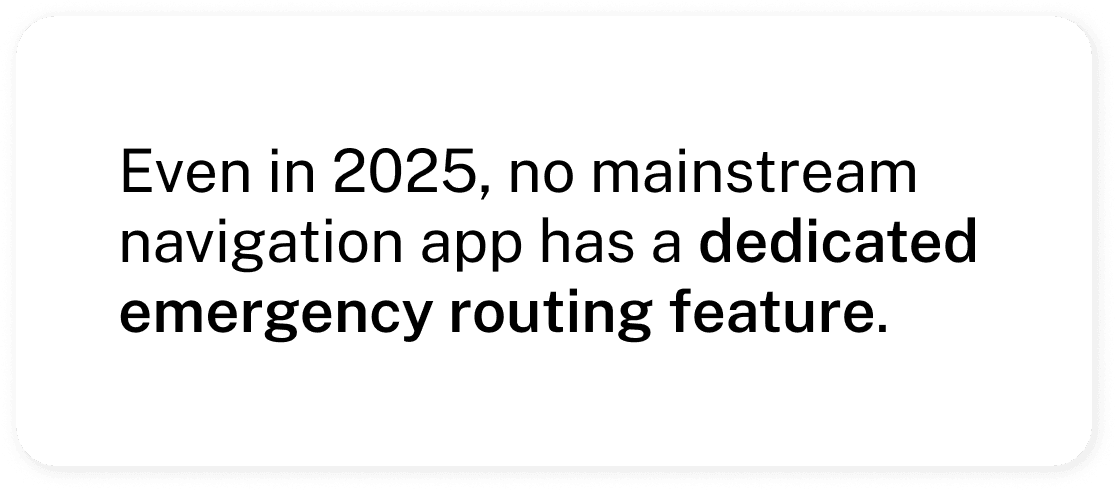
A familiar app to reduce learning curve and cognitive load. An emergency icon or prompt is added subtly so users can discover the feature quickly in panic situations.

WHY THIS PROJECT MATTERS

WHY THIS PROJECT MATTERS

When seconds define survival, design must cut through complexity. This project rethinks how emergency communication moves not just between people, but between platforms, systems, and cities. By embedding alert signals into interfaces already trusted by millions, we turned familiar tools into life-saving triggers.


What began as a redesign of a screen became a redesign of response.

 Every decision from real-time hospital filters to the “Send Alert” CTA focused on collapsing friction between intent and action. We were not just designing an app flow, we were designing coordination.

From roommates sharing bills to coworkers organizing lunch runs to students tracking weekly groceries, people rely on apps like Splitwise to manage group expenses.


Designing for Urgency, Across Systems

From roommates sharing bills to coworkers organizing lunch runs to students tracking weekly groceries, people rely on apps like Splitwise to manage group expenses.


MY LEARNINGS AS A DESIGNER

MY LEARNINGS AS A DESIGNER

  • People do not need more apps. They need smarter systems embedded in what they already use.

  • Alerts are only useful if they are context-aware, role-specific, and frictionless.


  • Designing for emergencies means designing for clarity and predicting the unpredictable.

From roommates sharing bills to coworkers organizing lunch runs to students tracking weekly groceries, people rely on apps like Splitwise to manage group expenses.


This prototype opens a larger conversation about city-wide synchronizations, sensor-based auto-alerts, and policy partnerships.


Imagine a future where the moment an ambulance moves, the city moves with it.

This prototype opens a larger conversation about city-wide synchronizations, sensor-based auto-alerts, and policy partnerships.


Imagine a future where the moment an ambulance moves, the city moves with it.

ReFrame.ai

Conversational UI · Interaction Design · Experience Design · Speculative Futures

->

Splitwise Reimagined

Mobile Experience · Interaction Patterns · Usability Improvement

->

ReFrame.ai

Conversational UI · Interaction Design · Experience Design · Speculative Futures

->

Splitwise Reimagined

Mobile Experience · Interaction Patterns · Usability Improvement

->

Turning navigation

into life-saving coordination

Turning navigation

into life-saving coordination

Google Maps: Emergency Link

3 weeks | Individual Designer

OVERVIEW

In emergencies, time is lost in confusion, sharing exact location, coordinating help, and staying connected isn’t seamless in Google Maps today.

IMPACT

Emergency Link adds a one-tap safety feature to Google Maps. It instantly shares live location and critical details with trusted contacts, enabling faster responses, clearer coordination, and potentially life-saving outcomes.